
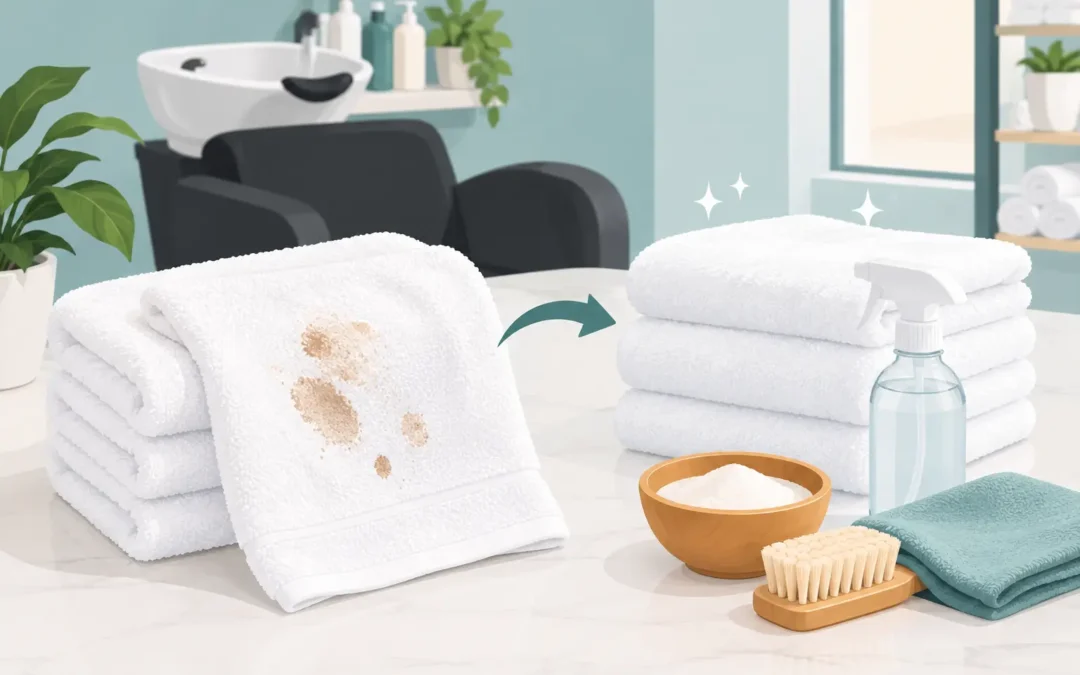
Hair color around a stylist station, facial oil in the spa room, and makeup at the shampoo bowl can turn clean inventory into unusable linen quickly. Knowing how to remove salon towel stains without over-processing the fabric helps protect your towel budget, maintain a professional appearance, and keep enough fresh towels in circulation through a full day of appointments.
The best results come from a consistent laundry process, not from using the strongest product available. Commercial towels are made to handle frequent washing, but repeated chlorine exposure, excessive heat, and overloaded machines will shorten their useful life. Match the treatment to the stain, follow product directions, and separate towels before the stain has a chance to set.
Identify the Stain Before You Treat It
Salon stains do not all respond to the same chemistry. A dark hair-color mark needs a different approach than massage oil or a yellow makeup transfer. Treating every towel with bleach may brighten white cotton temporarily, but it can also weaken fibers, create yellowing, and reduce absorbency over time.
Hair color, toner, and direct dyes are among the most difficult stains because pigments can bind quickly to cotton fibers. Lightener and peroxide products may leave discolored patches rather than a removable surface stain. Those towels are often permanently altered, even if they are still clean and suitable for back-of-house use.
Oil-based stains from conditioning treatments, facial products, wax, massage oil, and pomade need a detergent or pretreatment that breaks down oils. Makeup may contain both pigments and oils, so it usually benefits from pretreatment before a normal wash. Self-tanner, coffee, and product residue can often be improved with oxygen bleach and a warm wash, provided the care label allows it.
Remove Salon Towel Stains in a Consistent Order
Time matters. A towel tossed into a damp hamper with color or oil on it is much harder to recover at the end of the day. Designate a small, labeled container for stained towels near color stations and treatment rooms. This keeps stained pieces separate from general laundry and gives staff a simple routine to follow.
First, scrape away any heavy product with a disposable towel or dull tool. Do not rub the stain deeper into the fabric. Rinse the affected area with cool or lukewarm water when possible. Hot water can set protein-based residue and may make some pigments more difficult to release.
Apply a commercial laundry pretreatment or a small amount of heavy-duty liquid detergent directly to the stain. Work it in gently with gloved fingers, then allow it to sit for the time stated on the product label. For oily stains, this step is often more effective than adding extra detergent to the wash cycle.
Wash the towels in the warmest water temperature allowed by the towel care instructions. White cotton salon towels usually tolerate warm or hot laundering, but color towels, microfiber cloths, and towels with decorative trim may require cooler settings. Use the correct amount of detergent for the machine size, water hardness, and soil level. Too little detergent leaves oils behind; too much can leave a residue that makes towels stiff and less absorbent.
Check the towels before they enter the dryer. Dryer heat can set remaining stains and make a second treatment less effective. If a mark remains, repeat the pretreatment and wash process or move the towel into a secondary-use category. A towel with a faint permanent color mark can still serve well for cleaning, color application, or other non-client-facing work.
When Oxygen Bleach Makes Sense
Oxygen bleach is a useful option for many salon laundry programs. Unlike chlorine bleach, it works by releasing oxygen in water and is generally less harsh on cotton fibers when used correctly. It can help lift dinginess, makeup, tea, coffee, and some organic stains from white towels.
For a routine whitening treatment, dissolve oxygen bleach according to its label directions and add it to the wash or presoak cycle. Give heavily stained white towels enough contact time. A quick wash cycle may not be sufficient, especially when towels have absorbed product buildup over several uses.
Oxygen bleach is not a guaranteed solution for permanent hair-color dyes, bleach spots, or old stains that have gone through a hot dryer. It is also not suitable for every fabric or color. Keep it away from products that specify no bleaching, and do not assume colorfast towels will remain unchanged after a strong soaking treatment. Test a small area or reserve the method for white cotton inventory when there is any doubt.
Use Chlorine Bleach Carefully
Chlorine bleach can sanitize and whiten white cotton towels, but it should be a controlled part of the process rather than a daily answer to every stain. Overuse causes fiber damage, thinning, yellowing, and a rough hand feel. It can also react poorly with residues from certain salon chemicals.
Never mix chlorine bleach with ammonia, acids, vinegar, or other cleaning products. Keep it separate from direct contact with concentrated detergent, and use only the amount appropriate for the load. If your salon handles a large volume of towels, follow equipment and chemical-supplier guidance for dilution and dispensing. A properly measured commercial laundry program is safer and more repeatable than staff estimating from a bottle.
Separate Towels by Color, Use, and Soil Level
A practical sorting system reduces stain transfer and prevents good towels from being treated like heavily soiled utility linens. At minimum, separate white towels, dark or colored towels, and microfiber cloths. Microfiber needs its own process because fabric softener, high heat, and lint from cotton towels can reduce its cleaning performance.
It also helps to separate towels used for hair color, facial services, massage, and general drying. Color-service towels carry the highest risk of permanent dye transfer. Many salons choose dark towels specifically for these stations because color marks are less visible and the towels stay presentable longer. White towels remain a strong choice for guest-facing drying and spa services when they are washed in a disciplined whitening program.
Do not overload machines. Towels need room to circulate so water, detergent, and rinse cycles can do their job. An overloaded washer traps soil in the load and can leave towels with a dull, gray appearance. In a busy salon, more smaller loads may cost a little more in labor, but they often protect inventory better than repeatedly rewashing oversized loads.
Prevent Stains From Becoming a Replacement Problem
The most economical towel program starts with the right towels for the job. Lightweight value towels may be appropriate for high-turnover cleaning tasks, while heavier institutional towels can be a better fit for repeated client drying and frequent commercial laundering. For premium salons and spas, a denser towel can improve the client experience, but it also requires proper wash capacity and drying time.
Build par levels that reflect real appointment volume. When towel stock is too tight, staff may use clean guest towels for color work or rush stain treatment until the end of the shift. Keeping dedicated color towels, treatment towels, and client towels in separate storage areas makes correct use easier.
Track recurring stain issues for two or three weeks. If oil stains are the main problem, review pretreatment and detergent selection. If white towels look gray, check load size, detergent dosing, water quality, and rinse performance before increasing bleach. If hair-color stains are common, add more dark utility towels at each station. These small adjustments usually cost less than replacing client-facing inventory early.
Know When a Towel Has Reached Its Best Use
Not every stained towel belongs in the discard pile. A clean towel with a permanent mark may still be useful for cleanup, backbar tasks, or color application. However, towels that are thin, rough, frayed, heavily stained, or no longer absorbent should not be placed in front of clients. They affect the service experience and can make an otherwise orderly salon look poorly maintained.
First-quality towels selected for the right application will hold up better, but no textile is immune to chemical exposure and constant laundering. Keeping separate towel types for client service and hard-use tasks gives each group a longer, more appropriate service life.
A clear stain routine, proper sorting, and dependable replacement stock give staff one less decision to make during a busy shift. When towels look clean, feel soft, and perform as expected, clients notice the care behind the service.