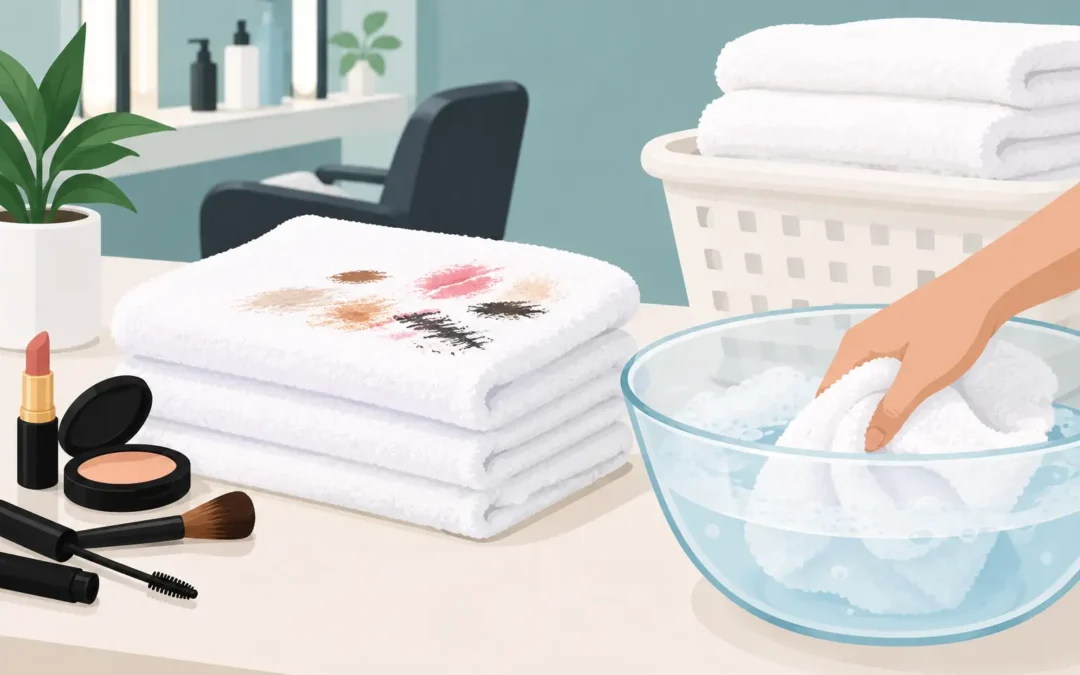
A foundation streak on a clean white towel can make an otherwise polished treatment room look careless. To remove makeup from salon towels successfully, staff need to handle the stain before heat, overloading, or the wrong chemical locks it into the fibers. A consistent laundry routine protects both your linen investment and the client experience.
Makeup stains are rarely just one thing. Foundation and concealer often combine pigment with oils, waxes, and silicone-based ingredients. Waterproof mascara, long-wear lipstick, self-tanner, and setting spray each create different problems. The best results come from separating soiled towels promptly, treating stains while they are fresh, and using a wash process suited to the towel fiber and color.
Why Makeup Stains Need a Different Process
A standard wash cycle may remove surface product, but it does not always release the oily base that holds pigment in place. When a towel is dried before the stain is fully gone, heat can set the remaining residue. Repeated drying makes the towel look permanently gray, yellowed, or spotted even when it is otherwise in good condition.
Salon towels also see frequent laundering. Aggressive stain treatment on every load can shorten fiber life, reduce absorbency, and leave towels feeling rough. The goal is not to use the strongest chemical available. It is to use the right treatment early enough that ordinary commercial laundering can finish the job.
How to Remove Makeup From Salon Towels
Sort stained towels as soon as possible
Do not leave makeup towels in a closed hamper for days. Oils and pigments migrate deeper into the fibers as they sit, especially in warm, humid back rooms. Collect used facial towels, washcloths, and makeup-removal linens in a dedicated container and process them regularly.
Separate white towels from colored towels before treatment. White cotton towels allow more stain-removal options, including carefully managed whitening products. Colored towels require a color-safe process. Also keep heavily soiled makeup towels apart from lightly used bath towels, spa wraps, and fresh service linens so residue does not transfer during the wash.
Pretreat oil-based marks before washing
For fresh foundation, lipstick, concealer, or cream blush, apply a commercial laundry pretreatment or a small amount of liquid detergent directly to the affected area. Work it gently into the fabric with gloved fingers or a soft brush. Avoid scrubbing hard enough to roughen the pile or distort the towel surface.
Allow the pretreatment to sit for the time directed on its label, then wash the towel promptly. Do not let treated towels dry out completely before laundering. With large volumes of salon linen, use a pretreatment product and dilution method that staff can repeat consistently rather than relying on improvised mixtures from station to station.
Waterproof mascara and transfer-resistant lip color may need a second pretreatment because their formulas are designed to resist moisture and wear. Repeat the treatment and wash cycle if needed. It is better to rewash a towel than to send it through the dryer with a visible stain.
Wash at the proper temperature and load size
Use the hottest water temperature permitted by the towel care label and your detergent system. Warm or hot water generally helps release oils from white cotton salon towels, but excessive heat can damage certain blends, shrink towels, or cause color loss. When in doubt, follow the manufacturer’s laundering guidance for that specific item.
Do not pack the washer too tightly. Towels need enough water movement for detergent to reach the stain and rinse away loosened makeup. Overloaded machines leave residue behind and can make towels feel stiff after drying. A heavy-soil or extended wash cycle is often more useful than simply adding more detergent.
Use the correct amount of detergent for the machine size, water hardness, and soil level. Too little detergent may leave makeup oils behind. Too much can leave a film that reduces absorbency and attracts more soil over time. If towels feel coated or have a dull appearance after washing, review detergent dosing and rinse performance before replacing the linen.
Inspect before drying
This is the step many operations skip when laundry is moving quickly. Inspect a sample of the load before it goes into the dryer, paying close attention to white washcloths and facial towels. If makeup remains visible, re-treat and rewash it.
Dry only towels that are clean. Drying is useful for finishing linen, but it is not a stain-removal step. Once a foundation or lipstick mark has been heat-set, the towel may require repeated processing and still fail to return to a presentable standard.
Whitening White Towels Without Wearing Them Out
For white, bleach-safe cotton towels, oxygen-based bleach is often a practical choice for routine brightening and stain support. It works well as part of a regular wash program and is generally less harsh on fibers than repeated chlorine bleach use. Follow the product directions for water temperature, dilution, and contact time.
Chlorine bleach can be effective on certain white cotton towels, but it should be used carefully and only when the towel and laundry system are compatible with it. Overuse can weaken cotton fibers, contribute to yellowing, and shorten the useful life of towels. Never use chlorine bleach on colored towels, and do not mix it with other cleaning chemicals.
If a white towel stays gray after proper washing, the issue may be buildup rather than a single stain. Makeup residue, excess detergent, hard-water minerals, and fabric softener can all affect appearance. Review the full laundry formula instead of increasing bleach automatically.
Common Mistakes That Ruin Salon Towels
A few habits cause most premature towel loss:
- Putting stained towels directly into the dryer before checking them.
- Using fabric softener, which can coat fibers and reduce towel absorbency.
- Applying undiluted bleach repeatedly to the same area.
- Washing white towels with dark or brightly colored salon linens.
- Overloading washers and dryers to save one cycle.
Fabric softener deserves special attention in salons and spas. Towels may feel temporarily softer, but the coating can reduce the absorbency needed for facials, hair services, and client cleanup. Proper detergent dosing, complete rinsing, and correct drying are better ways to maintain a clean hand feel.
Choose Towels That Match the Service
Laundry procedures matter, but towel selection also affects how well makeup stains release. A medium-weight, commercial-grade cotton washcloth or hand towel is often the most practical choice for daily makeup removal and facial services. It provides useful absorbency without the overly dense pile that can hold product deep in the fabric.
White towels offer a clean, uniform presentation and allow the broadest stain-treatment options. They are a sensible choice for esthetic services, facial rooms, and operations that maintain a disciplined whitening program. Dark towels can be useful at makeup stations or for services where visible transfer is expected, but they still need thorough washing and should be processed separately to protect color.
Microfiber cloths can remove makeup effectively, particularly for retail or light-duty facial use, but they require their own care. Wash microfiber separately from cotton when possible, avoid fabric softener, and use lower drying heat according to the product instructions. For a high-volume salon, cotton towels are often easier to integrate into a standard commercial linen program.
Buy enough working inventory to avoid rushing stained towels back into service. A backup par level gives staff time to sort, pretreat, wash, inspect, and fully dry linens without cutting corners during a busy appointment schedule. First-quality towels built for repeated laundering will cost more than disposable or irregular alternatives, but they deliver more dependable presentation and replacement value over time.
A makeup-stain routine works best when it is simple enough for every shift to follow: separate the towels, pretreat fresh marks, wash without overloading, and never dry a stain you can still see. That small amount of control keeps service towels ready for the next client instead of turning them into premature rag stock.