
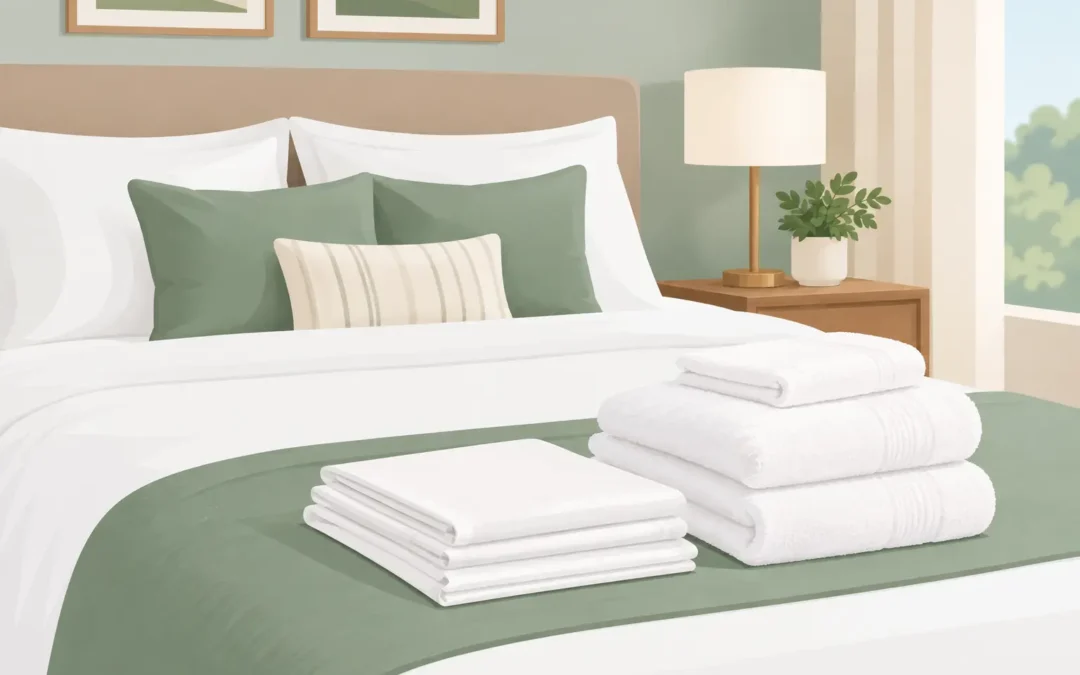
A bed-and-breakfast guest may not remember the exact color of a bedside lamp, but they will notice a scratchy sheet, a flat pillow, or a thin towel that never feels dry. Essential bed breakfast linens are not simply room supplies. They affect guest comfort, housekeeping efficiency, laundry cost, and the overall standard your property communicates.
For an owner-operated inn, every linen purchase needs to work harder than it would in a private home. Bedding and bath goods may be washed several times a week, handled by different staff members, and expected to look presentable after repeated use. The right buying decision starts with matching each item to its job, rather than choosing based on price alone.
Start With the Beds Guests Use Every Night
Sheets are the foundation of a guest room. They need to feel clean and comfortable on arrival, fit the mattress correctly, and hold up through regular commercial laundering. A sheet that is too light may wear out early. A very heavy or delicate sheet can feel premium but may take longer to dry, wrinkle more easily, or require added care.
For many bed-and-breakfast properties, a practical cotton-rich or cotton-polyester blend offers the right balance. Cotton contributes breathability and a familiar hand feel. Polyester adds strength, helps reduce wrinkling, and can improve service life under frequent laundering. All-cotton sheets can be a good choice for properties positioned around a more traditional or upscale guest experience, provided the laundry operation can support them.
Thread count is only one part of the decision. Construction, fiber quality, finish, and fabric weight often matter more in an operating environment. A first-quality institutional sheet with a sensible thread count can outperform a higher-count sheet that was made for occasional home use.
Choose the Right Sheet Sizes and Pocket Depth
Measure every mattress before ordering. This step prevents one of the most common guest-room problems: fitted sheets that pull loose at the corners. Account for the mattress depth, any mattress pad, and the height added by a topper.
Standardizing mattresses where possible makes linen purchasing much easier. If your property has a mix of queen, king, and specialty beds, label storage shelves clearly and keep each size separated. Flat sheets may offer some flexibility across beds, but fitted sheets, mattress pads, and comforters must match the actual bed dimensions.
White sheets remain the practical choice for many properties. They support a crisp, clean room presentation, allow for consistent stain treatment, and can be replaced without worrying about dye-lot variation. Patterned or colored top sheets can add character, but they should be used carefully if replacement availability and laundry sorting are concerns.
Essential Bed Breakfast Linens Need Layering
A well-made bed should suit more than one kind of guest. Some guests sleep warm, others need extra insulation, and room temperatures can vary by season or building layout. Layering gives housekeeping a manageable way to prepare rooms without stocking a completely different bedding package for every condition.
Start with a quality mattress pad. It adds a barrier between the mattress and fitted sheet, improves the bed’s appearance, and can add a small amount of comfort. In a high-turnover operation, a durable, easy-care pad is usually more practical than a thick specialty pad that takes too long to wash and dry.
For the main cover, a blanket, bedspread, comforter, or duvet-style insert should be selected based on your room style and laundry process. Blankets are flexible and easy to add or remove. Commercial comforters provide a more finished appearance but may need more storage and a planned cleaning schedule. Duvet covers can make it easier to refresh the outer layer, although they add a step for housekeeping when making beds.
Keep at least one extra blanket available in each room or readily accessible to staff. Guests appreciate the option, especially in mountain regions, older buildings, or rooms with varying sun exposure. A clean, properly folded extra blanket is better than a guest needing to request one late at night.
Pillows Should Feel Consistent, Not Identical
Pillows are personal, but a bed-and-breakfast can still offer a dependable standard. A medium-fill pillow is a sensible default because it works for a broad range of sleepers. Each bed should have enough pillows for its size and guest capacity, with pillows that are clean, supportive, and protected.
Use pillow protectors under every pillowcase. Protectors help extend the useful life of pillows, provide another hygiene layer, and simplify replacement planning. Pillowcases should be stocked generously because they are among the most frequently changed items in the linen room.
Decorative shams can improve presentation, particularly in premium rooms, but they should not replace functional sleeping pillows. If decorative pieces complicate turnover, require special handling, or frequently disappear into laundry carts, keep the presentation simple. Clean, well-fitted bedding creates a stronger impression than excessive decoration.
Build a Bath Linen Package Around Real Turnover
Bath linens need to absorb well, dry reasonably fast, and stay presentable after repeated washing. A bed-and-breakfast should supply a coordinated set that typically includes bath towels, hand towels, washcloths, and bath mats. The exact quantity depends on occupancy, housekeeping schedules, laundry capacity, and whether guests can request fresh towels during longer stays.
Towel weight should match the property’s service level and laundry operation. Lighter institutional towels dry faster and can be an economical choice for high-turnover properties. Heavier towels feel more substantial and can support a premium room rate, but they require more drying time, more storage space, and greater replacement investment. Neither choice is automatically better. The right one fits the guest expectation and the way your property operates.
White bath linens are generally the easiest to manage. They look clean, coordinate with any room design, and make it easier to maintain a uniform supply. A darker makeup towel or dedicated makeup-removal cloth can help reduce staining on white washcloths, especially in properties serving weddings, events, or spa-oriented travelers.
Bath mats deserve close attention because they affect both comfort and safety. Choose mats designed for repeated laundering and replace them when the pile becomes thin, the backing deteriorates, or they no longer lie flat. A worn bath mat can make an otherwise clean bathroom feel neglected.
Set Par Levels Before You Place an Order
A linen shortage creates unnecessary pressure on staff. Guests are checking in, rooms need to be turned, and the laundry may still be running. Par levels prevent this problem by ensuring that one set is in use, one set is being laundered, and one set is clean and ready for the next turnover.
A three-par system is a useful starting point for many properties, but it is not a fixed rule. A small inn with on-site laundry and dependable turnaround may operate well with three sets per room. A property with limited laundry equipment, off-site service, seasonal peaks, or frequent same-day turnovers may need four par or more.
When calculating par, include replacement stock. Stains, tears, missing pieces, and unexpected demand are normal parts of linen operations. Purchasing only the exact number needed for current rooms often results in mismatched replacements and rushed orders later.
Store clean linens in a dry, enclosed area away from chemicals, maintenance supplies, and food service products. Organize by item and size, then use older inventory first. This simple rotation helps prevent one group of sheets or towels from carrying all the wash wear while another sits unused.
Buy for First Quality and Repeat Availability
A low initial price can become expensive when fabric fails early, sizing is inconsistent, or replacement stock cannot be matched. For bed-and-breakfast operations, first-quality merchandise matters because the guest sees and feels the result directly. It also gives staff more confidence that the next shipment will perform like the last one.
When comparing linens, ask practical questions. Is the product intended for repeated laundering? Does the size allow for normal shrinkage? Is the fabric weight appropriate for your dryers? Can you reorder the same item when occupancy increases or inventory needs replacement? These details are more useful than a product description built around appearance alone.
United Textile Supply carries first-quality bedding and bath linen options across value, institutional, and premium tiers, making it easier to select goods based on room type, budget, and expected laundry use. A consistent supplier can also simplify reorders as your property grows.
Keep the Guest Experience in View
The best linen program is not necessarily the softest, thickest, or most expensive one. It is the program that delivers a clean, comfortable, consistent room every time while allowing your staff to keep up with demand. Start with properly fitting sheets, durable towels, protective layers, and enough backup inventory to avoid last-minute compromises.
Guests may not ask what fabric blend is on the bed or how many towels you keep in reserve. They will recognize a room that feels cared for. Build your linen supply around that result, and your daily operation will be easier to manage along the way.