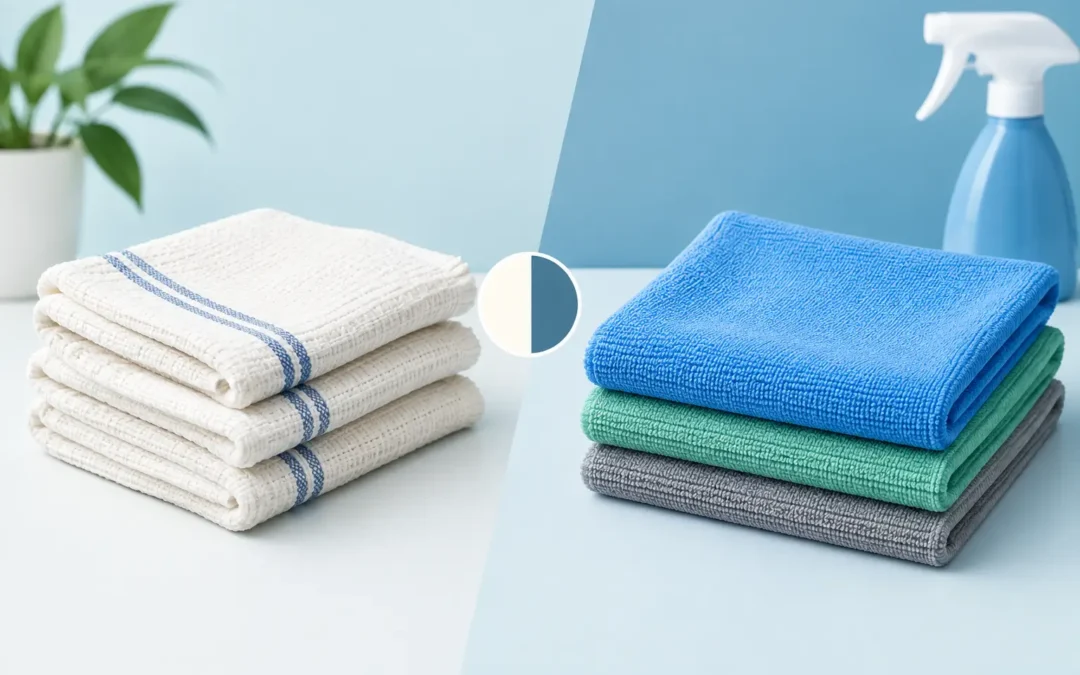
A hotel housekeeper resetting rooms, a salon cleaning stations between clients, and a homeowner wiping kitchen counters may all reach for a cloth first. Yet cotton versus microfiber cleaning cloths is not a simple quality contest. Each material performs differently with water, soil, chemicals, heat, and repeated commercial laundering. The better choice depends on the surface, the task, and how the cloth will be processed after use.
For facilities that buy textiles in volume, the right cloth can reduce replacement costs, improve cleaning speed, and help maintain a professional appearance. For home users, it can mean fewer streaks on glass, less lint on surfaces, and a longer service life from everyday supplies.
Cotton Versus Microfiber Cleaning Cloths: The Main Difference
Cotton is a natural fiber with a familiar feel, strong liquid absorption, and dependable performance for messy, wet work. Cotton cleaning cloths, including bar mops and terry towels, are commonly used where spills, grease, food service cleanup, or general wiping are part of the daily routine. They are substantial in the hand and remain a practical choice for many institutional operations.
Microfiber is a manufactured fiber, typically made from polyester and polyamide, split into extremely fine strands. Those fine fibers create more surface area than conventional cotton yarns. As a result, microfiber can pick up fine dust, oils, fingerprints, and small particles effectively, often with less water or cleaning solution.
Neither material replaces the other across every department. Cotton is often the workhorse for heavy moisture and rough cleanup. Microfiber is often the precision cloth for smooth surfaces and detailed cleaning.
Where Cotton Cleaning Cloths Perform Best
Cotton has earned its place in kitchens, janitorial closets, maintenance carts, and housekeeping operations because it handles volume. A quality cotton bar mop can absorb a substantial amount of liquid, making it useful for countertop spills, dish area cleanup, restroom drying, and general utility work. Terry construction also provides texture that helps with wiping up thicker soils.
For food service and back-of-house use, cotton is a sensible option when cloths will be exposed to grease, sauces, and frequent saturation. A heavier cotton cloth may feel bulkier than microfiber, but that bulk can be an advantage when the job calls for real absorption rather than a light polishing pass.
Cotton also performs well on rougher, less delicate surfaces. Maintenance teams may prefer it for utility rooms, mop-up work, equipment exteriors, and other areas where a soft, fine-detail cloth is unnecessary. The fiber can tolerate high-temperature laundering when the product and wash process are appropriate, which supports operations that rely on demanding laundry cycles.
The trade-off is lint and drying time. Lower-grade cotton cloths can leave lint behind on mirrors, glass, dark surfaces, and polished fixtures. Cotton also holds more water after use, so it may take longer to dry and can develop odor if damp cloths are left in a hamper or cart too long.
Where Microfiber Cleaning Cloths Perform Best
Microfiber is especially useful for tasks where appearance matters. It is a strong choice for mirrors, glass doors, chrome, stainless steel, reception counters, display surfaces, gym equipment, finished furniture, and guest-room touchpoints. The fibers can capture dust and oily residue rather than simply pushing them across the surface.
Because microfiber cloths work effectively with limited moisture, they can help staff clean faster in light-duty applications. A properly dampened microfiber cloth may remove fingerprints from glass or polish a restroom fixture without leaving the heavy water trails associated with a saturated cotton towel. This is useful in hotels, spas, clinics, fitness centers, and offices where surfaces need a clean finish throughout the day.
Microfiber is also lightweight and generally dries faster than cotton. That can support faster turnaround between uses, provided cloths are laundered and stored correctly. Many facilities use color-coded microfiber cloths to separate restroom, food-service, guest-area, and general-purpose cleaning tasks. Color coding does not make a cloth sanitary on its own, but it can support better work habits and reduce cross-use mistakes.
The main limitation is that microfiber requires more careful laundry handling. High heat, bleach, fabric softener, and contact with lint-producing cotton loads can reduce its effectiveness. Fabric softener can coat the fibers and limit their ability to attract soil and absorb moisture. Microfiber also should not be used on every surface without checking the manufacturer’s cleaning guidance, particularly on very rough materials that may snag fine fibers.
Absorbency, Lint, and Surface Results
When comparing the two materials, absorbency needs a closer look. Cotton can hold more water by weight, which makes it valuable for spills and soaking wet work. Microfiber may not carry the same amount of liquid in a single cloth, but it can pick up and retain fine surface moisture efficiently. For a wet floor spill, cotton may be the better tool. For drying a faucet without streaks, microfiber usually has the advantage.
Lint is another major factor. Cotton, particularly value-grade cotton, can shed fibers during use and laundering. A first-quality cotton bar mop or towel will generally perform more consistently, but it still may not be the best choice for glass polishing. Microfiber is low lint when it is properly maintained, which is why it is commonly selected for visual-detail work.
For cleaning chemicals, follow the product label and facility procedures rather than assuming either material works with every formula. Cloth selection affects cleaning performance, but it does not replace the correct chemical, contact time, dilution, or disinfection procedure. A microfiber cloth can improve soil removal, while cotton can handle heavier moisture, but neither cloth alone disinfects a surface.
Choosing Cloths by Department and Task
Housekeeping departments often benefit from keeping both materials on the cart. Cotton bar mops or utility towels can handle spills, bathroom cleanup, and wet work. Microfiber cloths can be reserved for mirrors, glass, furniture, televisions, fixtures, and final-detail wiping. This division helps staff avoid using a heavy, linting cloth where a polished finish is expected.
In kitchens and food-service areas, cotton remains a practical everyday choice for general wiping and spill response. Buy enough inventory to allow clean replacements throughout the shift. Microfiber can be useful for stainless steel fronts, glass, and dining-area detail work, but it should be assigned and laundered according to the operation’s sanitation procedures.
Salons, spas, and clinics often favor microfiber for counters, product displays, mirrors, treatment-room surfaces, and equipment exteriors because it provides a cleaner-looking finish. Cotton remains useful for liquid-heavy cleanup and utility tasks. In any personal-care or health-care setting, use separate cloths by area and follow the site’s infection-control procedures.
For household use, the same practical split applies. Keep cotton cloths near the kitchen sink, laundry area, and garage. Keep microfiber cloths for windows, electronics, mirrors, stainless appliances, and dusting. One material does not need to do every job.
Laundry Practices That Protect Performance
Cloth life is heavily affected by laundry practice. Cotton should be washed promptly after use, especially when exposed to food soil, oils, or standing water. Do not let damp cotton cloths sit packed together for extended periods. Adequate wash chemistry, water temperature, drying, and storage help prevent odor and keep the cloths usable.
Microfiber should be washed separately from cotton whenever possible. Cotton lint can collect in the microfiber and reduce its low-lint advantage. Avoid fabric softener, and use bleach only when the cloth manufacturer and your facility procedures allow it. Moderate drying temperatures are generally safer than excessive heat, which can damage synthetic fibers over time.
Replacement timing also matters. Retire cloths that remain stained after proper laundering, lose absorbency, develop persistent odor, shed heavily, or show torn edges. A lower initial price is not always the lowest operating cost if cloths fail quickly or create rework for staff.
Buy for the Workload, Not Just the Unit Price
When ordering cleaning cloths, consider size, weight, construction, color, laundering method, and expected use frequency. A lightweight cloth may be appropriate for polishing and quick wipe-downs, while a heavier cotton bar mop may be a better value for wet, repeated-use tasks. Institutional buyers should also consider par levels: having too few cloths encourages reuse before laundering and makes it harder to maintain department separation.
United Textile Supply focuses on first-quality textiles because consistent construction matters when cloths are put through regular commercial use. The most effective purchase is usually a balanced supply of cotton utility cloths and microfiber detail cloths, selected for the work each department performs.
A cleaning cloth is a small operating expense, but it touches the guest room, treatment area, kitchen, restroom, and home every day. Match the fiber to the task, set clear laundry practices, and keep enough clean inventory on hand for staff to do the job right.