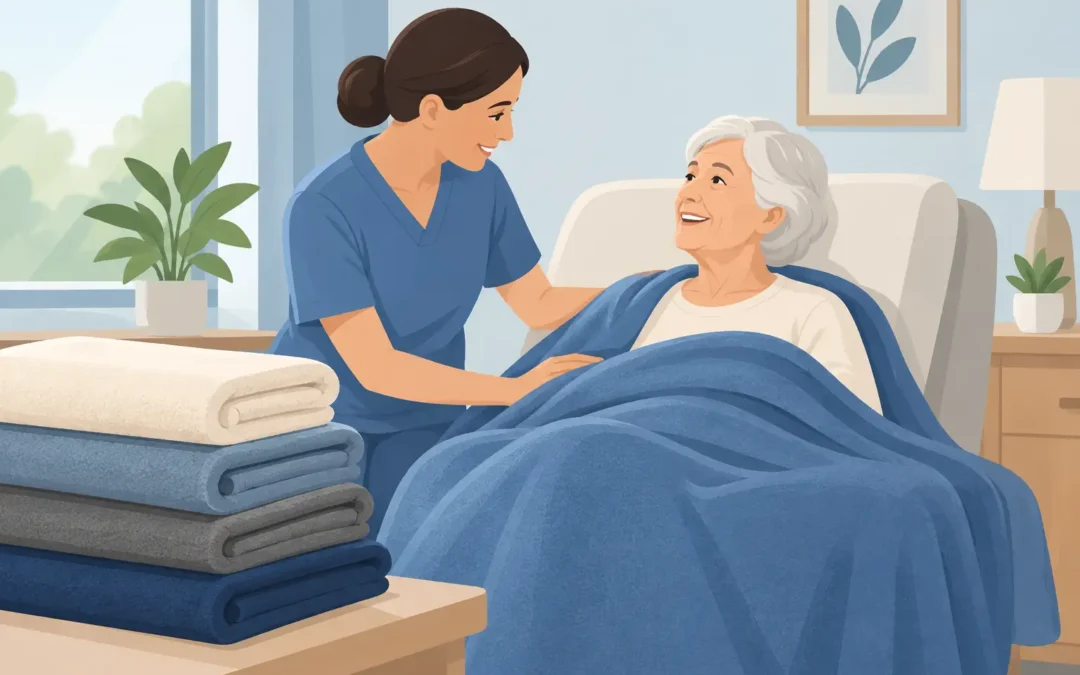
A blanket that pills after a few wash cycles, shrinks below the mattress line, or feels thin on a cold night creates problems far beyond the linen room. Institutional blankets for care facilities need to hold up to frequent processing while giving residents a clean, comfortable layer that staff can manage easily. The right choice depends on the resident population, room temperature, laundry process, replacement budget, and the level of warmth required.
For nursing homes, assisted living communities, rehabilitation centers, clinics, behavioral health facilities, and similar settings, blanket purchasing is not just a matter of color or price. It is a repeat-use decision. A lower initial cost can be sensible when turnover is high, but it is not a value if the blanket needs replacement too soon. First-quality blankets with the proper construction, size, and fabric weight usually provide more dependable service over time.
What Care Facilities Need From Institutional Blankets
Care environments place different demands on bedding than homes. Blankets are pulled, folded, transported, washed, dried, and redistributed continuously. They must be easy for staff to identify and handle while remaining presentable for residents and visiting families.
Durability starts with the fabric and construction. Cotton-rich thermal blankets, polyester blankets, fleece options, and blended constructions each have a place in institutional use. The best material is not universal. A facility with an on-premise laundry may choose differently than one using commercial linen service, and a long-term care setting may need more warmth than a short-stay clinic.
Size matters just as much. A blanket that is too small leaves the bed looking unfinished and may not provide adequate coverage. One that is oversized can be harder to process, fold, store, and distribute. Match blanket dimensions to the mattresses in use, including whether beds are standard twin, extra-long twin, full, queen, or specialty sizes.
Color selection should be practical. White remains a common choice because it supports a clean, uniform appearance and makes staining easier to identify. Beige, blue, green, and other neutral shades can also work well when a facility uses color coding by unit, floor, or laundry classification. The key is maintaining a consistent program so replacements blend with existing inventory.
Choosing Weight and Warmth for Resident Comfort
Blanket weight should reflect the building, season, and type of care delivered. Rooms with reliable climate control may only need a lighter blanket for year-round coverage. Older buildings, facilities in colder climates, or residents who tend to feel cold may require heavier options or a layered bedding approach.
A lightweight thermal blanket is often a useful everyday choice. Its open weave provides modest warmth without excessive bulk, and it can be easier to launder and dry than heavier bedding. Thermal styles also work well as part of a layered bed setup, where staff can add or remove blankets based on individual comfort needs.
Heavier woven blankets and fleece blankets provide more warmth and can feel softer to the touch. They are often a good fit for long-term residential settings where comfort and appearance carry more weight. However, heavier products can take longer to dry and may require more storage space. Facilities should confirm that their laundry equipment can process the selected blanket at the expected volume.
For many care operations, a mix is more practical than one blanket for every need. Lightweight blankets can serve standard rooms and warmer months, while heavier blankets remain available for colder areas, winter use, or residents who request additional warmth. This approach can control inventory costs without treating every room the same.
Consider the Feel, Not Only the Specifications
Residents spend substantial time in bed, especially in skilled nursing and rehabilitation settings. A blanket can meet a basic weight specification and still feel rough, stiff, or overly synthetic. That does not mean every facility needs a luxury-grade product, but it does mean hand feel deserves consideration.
A practical test is to evaluate samples after laundering, not only when they are new. Check whether the fabric stays comfortable, whether edges remain intact, and whether the blanket keeps its shape. A blanket that looks good out of the package but loses its appearance after repeated wash cycles is not a reliable institutional choice.
Fabric Options for Care Facilities
Cotton blankets remain popular because cotton is breathable, familiar, and comfortable. Woven cotton thermal blankets are a common institutional bedding staple, particularly when facilities want a traditional appearance and moderate warmth. Cotton can shrink if processing conditions are too aggressive, so pre-shrunk construction and proper laundry practices should be considered.
Polyester blankets are valued for durability, color retention, and quicker drying. They can be a sensible selection for high-turnover settings, emergency housing, transport programs, and operations where laundry speed matters. The trade-off is that some polyester constructions may not offer the same natural feel or breathability as cotton.
Cotton-polyester blends balance characteristics from both fibers. These blankets can provide a more comfortable hand than all-polyester alternatives while offering better dimensional stability and wash performance than some all-cotton products. For facilities looking for dependable everyday bedding, a blend is often worth evaluating.
Fleece blankets provide warmth with relatively low weight and are often appreciated in resident-facing settings. They are not always the best answer for every laundry operation, however. Facilities should verify how the pile performs after repeated washing, whether lint is a concern, and how the material handles high dryer temperatures.
Laundering, Hygiene, and Replacement Planning
Care facilities need blankets that work with established infection-control and laundry procedures. Follow the product care instructions and your facility’s approved laundering standards. Using temperatures, chemicals, or drying conditions beyond a blanket’s recommended limits can shorten its useful life, weaken fibers, and cause unnecessary shrinkage.
Before placing a large order, review the full handling cycle. Ask how blankets will be collected, sorted, washed, dried, folded, stored, and returned to rooms. A blanket that performs well in a small test may become inefficient if it tangles in equipment, dries slowly, or takes too much time to fold.
Replacement planning is also part of smart purchasing. Keep enough inventory to cover beds in service, laundry turnaround, isolation or special-use needs, and normal attrition. Ordering too close to minimum demand can leave staff scrambling when laundry volume rises or blankets are removed from use.
A simple par-level system helps. Establish the number of blankets needed per occupied bed, add a reserve based on laundry turnaround and seasonal demand, then monitor losses and replacements by unit. This gives purchasing staff a clearer picture of actual use instead of relying on an occasional emergency order.
Why First-Quality Merchandise Matters
Institutional buyers often see low-priced blankets offered as seconds, irregulars, or overruns. These products may appear economical, but consistency can be difficult to maintain. Variations in size, shade, weave, or finishing can make it harder to preserve a uniform bedding program.
First-quality merchandise provides a more reliable standard for routine purchasing. It supports predictable sizing, more consistent appearance, and repeat ordering when additional inventory is needed. For a care facility, that consistency helps the linen room operate with fewer surprises.
Price still matters, especially when budgets are tight. The goal is not to buy the most expensive blanket available. It is to select the appropriate grade for the application and compare cost against expected service life. A value-oriented institutional blanket can be the right choice for high-use operations, while a softer or heavier product may be justified in resident rooms where comfort is a stronger part of the experience.
Questions to Ask Before You Order
Before committing to a blanket program, confirm the size, fabric content, weight, finish, color, care instructions, and expected availability. If your facility uses commercial laundry service, involve that provider early. Their equipment and process may influence which materials and constructions perform best.
It also helps to review a sample in the actual environment. Place it on the bed, wash it according to normal procedures, and ask the staff members who make beds and manage laundry for feedback. Their experience can identify practical issues that a product specification alone will not show.
United Textile Supply helps institutional buyers compare blanket options by application, including weight, size, durability, and intended environment. Whether the priority is economical daily coverage, a warmer residential feel, or a consistent first-quality replacement program, selecting for the real demands of the facility will serve residents and staff better than choosing by price alone.
The most useful blanket program is one staff can reorder with confidence: the right coverage, dependable wash performance, and a level of comfort that makes every made bed look ready for care.