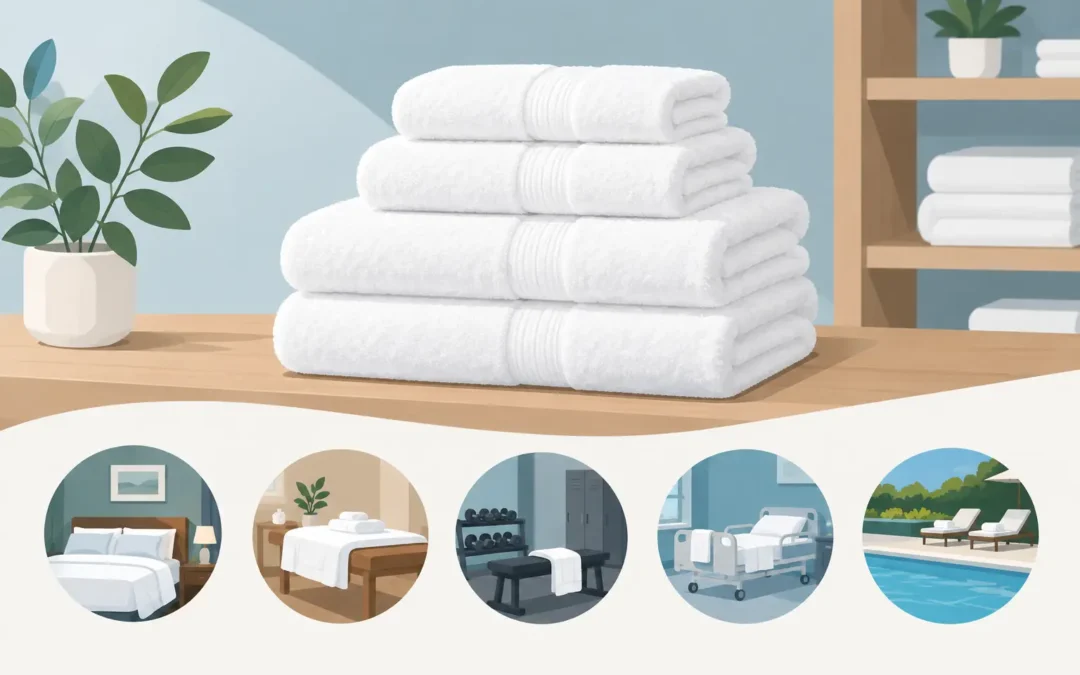
A bath sheet is not simply an oversized bath towel. Its larger surface area changes the guest experience, storage needs, drying time, and replacement cost. For hotels, spas, fitness centers, and residential properties, choosing bath sheets comes down to matching comfort expectations with the realities of frequent laundering and available linen space.
A well-chosen bath sheet gives guests fuller coverage after a shower, treatment, or swim. It can also add a more premium feel to a room or locker area without requiring a complete change to the rest of the bath linen program. The right choice depends on who will use it, how often it will be washed, and whether your operation can support a larger, heavier towel.
What Makes Bath Sheets Different?
Bath sheets are larger than standard bath towels. While bath towel dimensions vary by manufacturer, many standard towels fall near 27 by 52 inches. Bath sheets commonly measure about 35 by 60 inches or larger. That additional width and length matters to guests who want more coverage, but it also means each piece takes more room on shelving, in laundry carts, and in dryers.
For a hotel guest room, bath sheets can be a practical upgrade in suites, premium rooms, and extended-stay properties. A day spa may use them for clients who prefer generous coverage before or after services. At a gym or pool facility, however, a standard bath towel may be the more efficient choice when turnover is high and towel loss is a concern.
Size alone does not make a towel better. A poorly constructed oversized towel can feel thin, shed excessively, or wear down quickly. First-quality bath sheets should be evaluated by fiber, construction, weight, finish, and expected laundering conditions.
Start With the Intended Application
The best bath sheet for a household may not be the right one for a 100-room hotel. Before selecting a size or weight, consider how the linens will be issued, collected, washed, and replaced.
Hospitality operations often balance guest comfort against laundry volume. A larger bath sheet creates a more generous presentation, but it may increase wash loads and drying time. Properties with on-premise laundry should check washer and dryer capacity before changing a standard towel program. Operations using a commercial laundry service should confirm whether larger pieces affect processing charges or par levels.
Spas and salons generally place more value on softness, absorbency, and appearance. A plush white bath sheet can support a higher-end treatment experience, especially in changing areas and relaxation spaces. For these settings, it is usually worth selecting a towel with a softer hand and a refined finish, provided staff can follow the recommended wash process.
Health care, senior living, schools, and high-turnover fitness facilities tend to prioritize dependable performance and controlled cost. Bath sheets can still be appropriate for private rooms or specialty areas, but a commercial-grade option with consistent sizing and durable hems is usually a more sensible purchase than an extra-heavy luxury towel.
Choose the Right Weight Without Overbuying
Towel weight is often described in grams per square meter, or GSM. In general, a higher GSM indicates more cotton per square yard of fabric and a denser, heavier feel. It does not automatically guarantee better performance, but it is useful when comparing similar towel constructions.
A lower-to-midweight bath sheet is often a practical institutional choice. It offers good absorbency, dries more efficiently, and can hold up well through regular commercial laundering. This range makes sense for facilities where towels are washed daily and speed matters.
A midweight bath sheet offers a balance of comfort and durability. It is often suitable for hotels, bed-and-breakfasts, and homes where the goal is a fuller towel without excessive drying time. For many buyers, this is the most flexible category.
Heavier bath sheets create a noticeably plush presentation and can suit luxury guest rooms, premium spas, and households that want a more substantial towel. The trade-off is clear: heavier towels take longer to dry, occupy more storage space, and may require more careful laundering to maintain softness. Buy this level of weight for a reason, not simply because it sounds more luxurious.
Cotton, Blends, and Construction Matter
Cotton remains the standard fiber for bath sheets because it is absorbent, comfortable, and familiar to guests. The quality of the cotton, yarn, loops, and finishing process all affect how a towel performs over time.
Ring-spun cotton uses yarns that are smoother and generally softer than basic open-end yarns. It can be a good choice for hospitality and spa use where feel is part of the experience. Combed cotton goes through an additional process that removes shorter fibers, helping create a cleaner, softer surface. Premium collections may also use long-staple cotton for a more refined hand and strong absorbency.
Cotton-polyester blends can provide practical benefits in certain institutional environments. They may dry faster, resist some shrinkage, and hold up well under repeated washing. However, blends usually do not offer the same natural cotton feel that guests expect from a premium bath sheet. They are best considered when operational durability and laundry efficiency outweigh the need for a plush finish.
Look closely at edge construction as well. Reinforced hems and consistent stitching help reduce fraying after repeated wash cycles. A towel that looks good on the shelf but develops loose hems quickly is not a value purchase, regardless of its initial price.
Plan for Laundering Before You Place an Order
Bath sheets need room to move in the washer and dryer. Overloading equipment prevents proper rinsing, leaves detergent residue, and can make towels feel stiff. Because bath sheets are larger than standard towels, a facility may need to adjust load counts rather than treating them as a direct one-for-one replacement.
Use the appropriate amount of detergent and avoid excessive fabric softener. Too much softener can coat cotton loops and reduce absorbency. Bleach should be used according to the towel’s care guidance and only when necessary for sanitation and stain management. Overuse can weaken fibers and shorten towel life.
Drying thoroughly is essential, but over-drying also creates unnecessary wear. Commercial operations should set procedures that account for the towel’s weight and fiber content. If bath sheets come out of the dryer damp at the center or corners, reduce the load size or adjust the cycle rather than sending them back through repeatedly.
Calculate Par Levels and Storage Space
A bath-sheet program requires more than purchasing enough pieces for current occupancy. Facilities need sufficient par to cover use, laundry processing, damaged items, and peak demand. The right level varies by operation, but buyers should account for how long linens stay out of circulation.
For example, a small inn with on-premise laundry may operate comfortably with fewer pieces than a hotel relying on scheduled laundry pickup. A spa with back-to-back appointments may need extra stock available throughout the day. Pool areas and fitness centers may need additional inventory during weekends, events, or seasonal peaks.
Storage deserves the same attention. Larger towels fill shelves quickly, particularly when folded in a way that highlights a neat guest-room presentation. Measure linen closets, housekeeping carts, and shelving before committing to an oversized program. A bath sheet that does not fit your existing workflow can create unnecessary handling time for staff.
Keep Color and Presentation Practical
White bath sheets remain the standard for hotels, spas, health care settings, and many homes. White supports a clean, uniform appearance and allows for common stain-treatment procedures. It also makes it easier to combine replacement inventory from the same product line as needs change.
Colored bath sheets can work well in salons, clubhouses, pool areas, or home bathrooms where coordinating with the decor matters. Keep in mind that colors may require separate laundering, and replacements should be sourced consistently to avoid noticeable shade variation. If a facility uses color to identify departments or towel types, establish a clear sorting process for staff.
Texture is another presentation decision. A smooth, classic terry surface works in nearly every setting. Decorative borders, dobby patterns, and more elaborate styling can add visual appeal for guest-facing areas, but they should not interfere with folding, stacking, or everyday care.
Buy First Quality for Consistent Results
Commercial buyers need predictable merchandise. First-quality bath sheets provide the consistent sizing, construction, and appearance needed for a professional linen program. Irregular goods, mill seconds, or mixed lots may seem less expensive at the start, but inconsistent dimensions and defects can complicate storage, presentation, and replacement planning.
United Textile Supply helps buyers compare bath sheets by intended use, weight, size, and price point. For a property that needs everyday durability, a commercial-grade towel may be the right fit. For a luxury suite, spa, or home bathroom, a premium cotton option may deliver the added softness and coverage the user expects.
The most useful purchase is the one that fits your operation after the first wash, the hundredth wash, and the next busy weekend. Choose bath sheets that your staff can process efficiently, your storage can accommodate, and your guests will be glad to reach for.