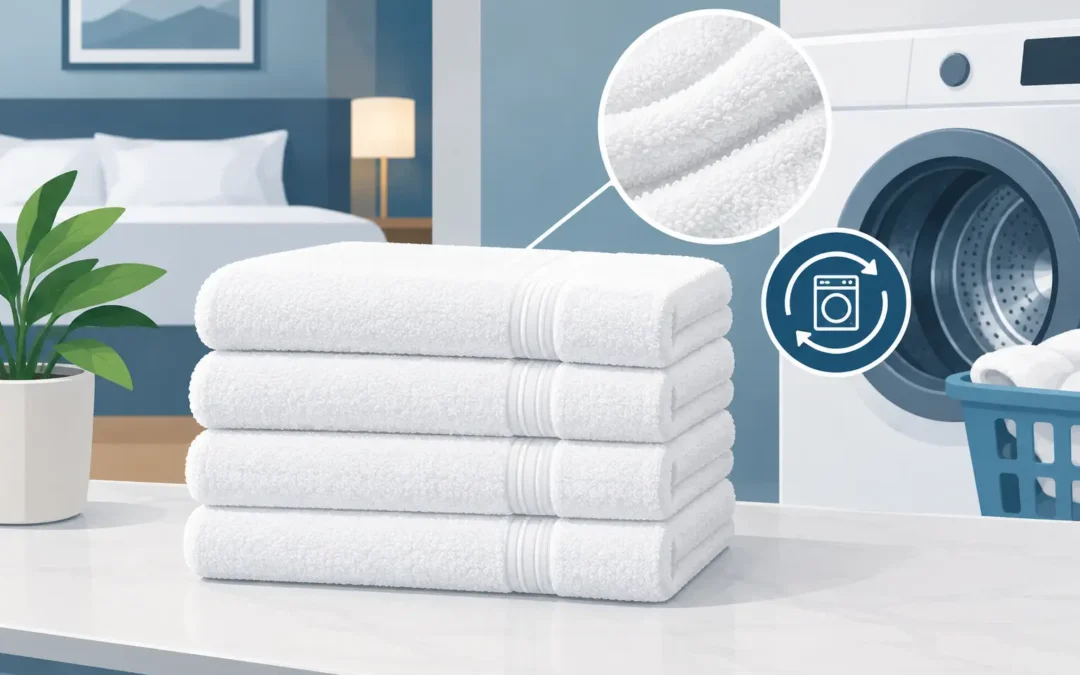
A motel towel can look acceptable when it arrives and still become an expensive choice after a few months in the laundry room. Motel towel durability is not simply a matter of buying the heaviest towel available. It comes from matching fiber, construction, weight, color, and care practices to the turnover and wash volume at your property.
For motel owners and managers, the practical question is cost per usable turn. A towel that costs less up front but thins quickly, develops loose hems, or loses its clean appearance early may cost more than a better-made institutional towel. The goal is dependable first-quality towels that stay presentable through repeated guest use and commercial laundering without putting unnecessary pressure on the linen budget.
What Determines Motel Towel Durability?
Durability starts at the yarn level. Cotton remains the standard for motel bath towels because it is absorbent, familiar to guests, and able to tolerate regular washing. However, not all cotton towels perform the same way. The quality of the cotton, yarn twist, loop construction, and finishing process all affect how a towel wears.
A towel made with a sound terry construction has loops that remain attached and absorbent after repeated laundering. Loose, poorly secured loops are more likely to snag and pull. Hem construction matters as well. Side hems and end hems receive frequent stress from folding, carts, dryers, and guest handling, so weak stitching often shows up as early edge failure.
Weight is another useful indicator, usually expressed in grams per square meter, or GSM. A higher GSM towel generally feels fuller and may offer more absorbency, but more weight does not automatically mean a better motel towel. Very heavy towels take longer to dry, can increase utility use, and may not be necessary for a limited-service property. A medium-weight commercial towel often provides the best balance of service life, drying time, and replacement cost.
Why Density Matters More Than Loft Alone
A plush towel can feel impressive on the shelf, yet a dense, well-constructed towel may last longer in daily service. Surface loft creates softness, but the towel also needs enough structure to hold up in washers and dryers. When comparing products, consider whether the towel feels substantial without being overly bulky and whether the loops appear even across the full surface.
For many motels, consistency is as important as the initial hand feel. When every room receives the same size, color, and weight towel, housekeeping can stock rooms quickly, inventory is easier to control, and guests receive a more reliable experience.
Select the Right Towel Weight for Your Property
The best weight depends on your property type, laundry equipment, climate, and guest expectations. A roadside motel with high turnover may need a practical institutional-grade bath towel that dries efficiently and can be processed quickly. A boutique motel or extended-stay property may choose a fuller towel to support a more upgraded room presentation.
Lightweight towels can reduce drying time and initial purchase cost, but they may wear faster if they are too thin for the wash volume. Heavy luxury towels deliver a premium feel, but they require more dryer capacity and careful handling to preserve softness. The middle range is often the strongest operational choice because it provides absorbency and a professional appearance without creating excessive laundry load.
Bath towels should not be selected in isolation. Hand towels and wash cloths usually receive different types of wear. Wash cloths encounter cosmetics, shaving products, and cleaning use more often, so they may need more frequent replacement. Hand towels are repeatedly pulled from racks and can show makeup stains or frayed edges. Buying a coordinated towel program with appropriate weights for each item helps control replacement costs.
Construction Details That Affect Service Life
Before purchasing, look beyond color and size. Ask about the features that influence how a towel performs after dozens of wash cycles.
Ring-spun cotton is commonly valued for a smoother, softer feel because the yarn is made from twisted cotton fibers. It can be a good fit where guest comfort is a priority. Open-end cotton is often used in value-oriented institutional towels and can be a sensible option for high-volume operations focused on dependable basics. Neither choice is automatically right for every motel. The proper selection depends on expected use, replacement schedule, and desired room standard.
Double-stitched hems can provide added protection at stressed edges. Even pile height and tightly formed loops help the towel maintain coverage and reduce the worn, flat look that makes linens seem old before they are actually unusable. Bleach-resistant or vat-dyed colors may also be worth considering for pool areas, housekeeping use, or properties that need color-coded linen programs.
White remains the most common motel towel color for good reason. It supports a clean visual standard, can be sorted easily, and allows controlled whitening processes when needed. Still, white towels demand attention to stain management. Makeup, hair dye, self-tanner, and certain skin-care products can create stains that normal washing will not fully remove.
Laundry Practices Can Extend or Shorten Towel Life
Even first-quality towels will fail early under harsh processing. Overloading washers prevents proper rinsing and creates excessive abrasion. Overloading dryers can leave towels damp or force extended cycles that weaken fibers over time. On the other hand, drying towels too hot for too long can make them stiff, reduce softness, and shorten usable life.
Use detergent amounts appropriate for water conditions and machine capacity. Excess detergent can build up in terry loops, making towels feel rough and less absorbent. Fabric softener should be used cautiously, if at all, because it can coat cotton fibers and reduce absorbency. A towel that feels slick may not perform well for the guest stepping out of the shower.
Bleach is another area where moderation matters. It can help maintain sanitation and whiteness when properly diluted and used according to product directions, but repeated overuse weakens cotton fibers. If towels are consistently gray, yellowed, or heavily stained, the answer may be better sorting and stain treatment rather than increasing bleach concentration.
Build a Simple Rotation System
A practical par system protects both service and towel life. Keep enough towels on hand so laundry staff are not forced to return items to rooms before they are fully dry, inspected, and folded. Separate stained or damaged pieces promptly, and remove towels with pulled loops, thinning centers, failed hems, or persistent odor.
Rotation also helps prevent a small portion of inventory from receiving all the wear. Stock linen carts from a consistent system so older serviceable towels move through the property before new inventory is opened. This provides a clearer picture of actual replacement needs.
Calculate Value by Usable Turns, Not Unit Price
A lower-priced towel can be the right choice when occupancy is seasonal, rooms are basic, or replacement frequency is expected. It becomes a poor value when it starts looking worn after limited use. Similarly, a premium towel may not make financial sense if the property lacks dryer capacity or has a high loss rate.
Compare towel options using more than the case price. Consider expected wash cycles, drying time, absorbency, guest-facing appearance, and the cost of early replacement. A slightly better towel that lasts longer and reduces guest complaints may offer a lower cost per turn.
It is also wise to standardize sizes and specifications before reordering. Changing towel weights or dimensions from one purchase to the next can complicate folding, shelving, and room presentation. Reliable supply of the same commercial towel family makes purchasing and housekeeping more predictable.
When to Replace Motel Towels
Replace towels when they no longer meet the standard your guests can see and feel. Thin centers, gray cast, rough texture, loose hems, snags, and reduced absorbency are common signals. A towel does not need to be torn to be past its guest-room life.
Retired bath towels can sometimes be reassigned to maintenance, cleanup, or other non-guest tasks if hygiene procedures allow. This gets additional utility from the purchase while keeping worn goods out of rooms. Do not let secondary-use inventory mix back into clean guest linen.
United Textile Supply helps buyers compare towel weight, size, quality grade, and intended application so they can choose commercial linens that fit their operating needs. The right choice may be a value institutional towel, a fuller guest-room towel, or a separate program for rooms and pool areas.
Start with the laundry reality at your property: how often towels are washed, how quickly they must dry, and what guests expect when they reach for one. A towel program built around those facts will stay useful longer and make each replacement order easier to justify.