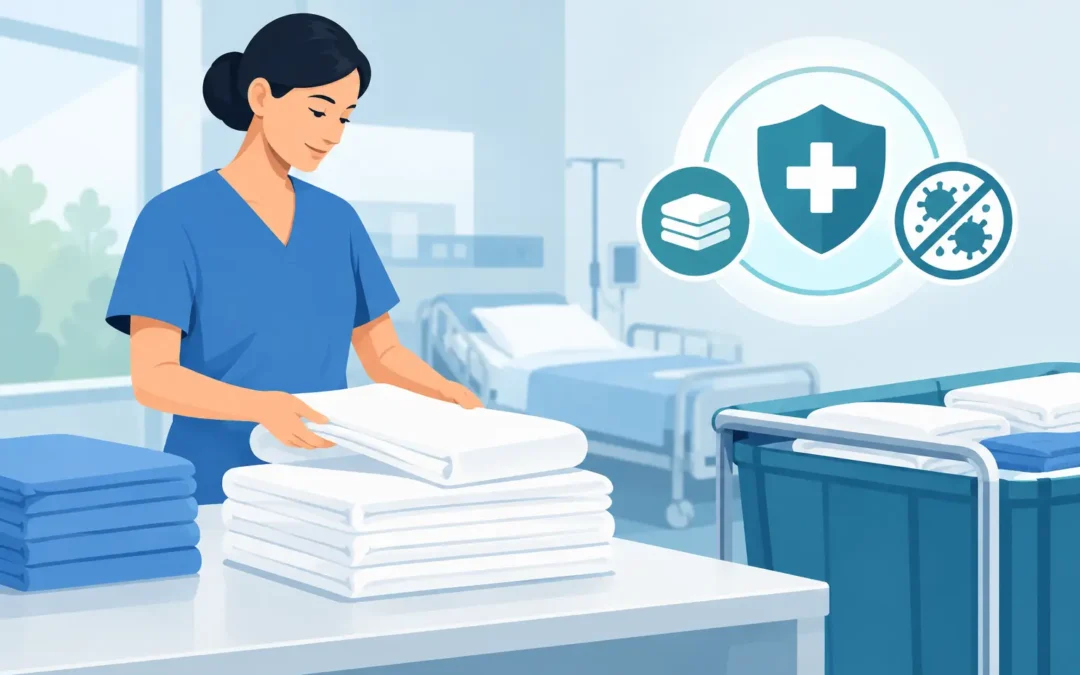
A stained wash cloth left in a resident room, a clean towel stored beside soiled linen, or sheets that lose their shape after repeated processing can create more than an appearance problem. Healthcare textile hygiene depends on the full linen cycle: selecting the right goods, separating clean from soiled items, laundering according to facility procedures, and replacing textiles before performance declines.
For hospitals, clinics, long-term care communities, rehabilitation centers, and personal care facilities, linens are working supplies. They must support patient comfort while standing up to frequent handling and commercial laundering. The best purchasing decision is rarely just the lowest unit price. It is the item that performs reliably through its expected service life.
What Healthcare Textile Hygiene Covers
Healthcare textile hygiene is the set of practices used to keep reusable linens and textile products clean, serviceable, and appropriately handled from delivery through use and laundering. It applies to patient sheets, pillowcases, blankets, bath towels, wash cloths, bath mats, staff towels, privacy curtains, microfiber cleaning cloths, and similar reusable goods.
A sound program has two purposes. First, it helps limit the transfer of soil and microorganisms through proper collection, washing, drying, storage, and distribution. Second, it keeps the facility supplied with textiles that remain comfortable, presentable, and fit for purpose.
Textiles do not need to be luxury products to do this job well. They do need to be first quality, correctly sized, suitable for the wash process, and replaced when their condition no longer meets facility standards.
Start With the Right Linen for the Application
A linen program works better when buyers match product specifications to the real environment. A lightweight towel may be a sensible value choice for a high-turnover outpatient setting. A skilled nursing facility may need a more substantial towel with better absorbency and longer service life. Patient bedding needs a balance of comfort, durability, and easy processing.
Weight, construction, fiber content, and finish all affect how a textile performs. Cotton-rich towels offer familiar absorbency and a comfortable hand, while blended products may provide a practical option where fast drying and laundering durability are priorities. Sheets and pillowcases should have dependable stitching and fabric construction that can tolerate repeated wash cycles without excessive thinning or seam failure.
Avoid treating all white towels or all institutional sheets as interchangeable. Two products with similar dimensions can perform very differently after weeks of commercial laundering. First-quality merchandise gives procurement teams a more consistent starting point than seconds or irregular goods, where variations in construction and appearance can complicate inventory control.
Choose practical sizes and colors
Standardizing sizes reduces sorting errors and makes par-level planning easier. A facility that uses several near-identical towel sizes or mixed sheet dimensions can lose time at every stage of the linen cycle. Clear size standards also help staff identify the correct item for each room or department.
White remains a practical choice for many patient-care environments because it presents a clean appearance and makes staining easier to identify. Still, colored textiles can make sense for departmental identification, housekeeping use, or designated tasks. If color coding is used, staff must understand that color supports workflow. It does not replace proper cleaning and handling procedures.
Build a Clean-to-Soiled Workflow
Good laundering cannot correct poor handling before the wash cycle begins. The most reliable textile hygiene programs keep clean and soiled goods clearly separated, with defined routes, containers, and storage areas.
Soiled linen should be placed directly into designated containers at the point of use. Staff should avoid shaking linens, carrying loose items against clothing, or placing used textiles on clean work surfaces. Wet items need prompt attention because prolonged damp storage can lead to odor, mildew, and fabric damage.
Clean linens should be protected from splash, dust, and contact with soiled goods. Store them in a dry, orderly location and distribute stock so older inventory is used first. Overstuffed carts, open storage near sinks, and mixed clean-soiled staging areas create avoidable problems even when the wash process itself is well managed.
Facilities should set procedures that align with their infection prevention policies, local requirements, and the textile care instructions supplied by the manufacturer. The exact workflow may differ between a small clinic with an outside laundry partner and a large care community with an on-site laundry. The principle stays the same: prevent cross-contact and move goods through the system without unnecessary handling.
Make Laundering Part of the Quality Plan
Laundering is both a hygiene process and a wear process. Water temperature, chemistry, load size, extraction, drying time, and finishing methods all affect results. Overdrying can weaken fibers and create a harsh feel. Underdrying can leave textiles damp in storage. Excessive bleach or poorly controlled chemistry can shorten useful life, while insufficient cleaning can leave odors, stains, or residual soil.
Follow the facility’s validated laundry procedures and the product care label. If an outside processor handles the work, purchasing and operations teams should still understand the processor’s requirements. A towel purchased for a mild home wash may not perform as expected in a high-temperature commercial system. Conversely, a commercial-grade item can be a better value when it retains absorbency, size, and appearance over repeated cycles.
Microfiber cleaning cloths deserve their own process. They are effective only when used and laundered correctly. Sorting microfiber away from lint-producing cotton goods, avoiding inappropriate softeners, and using designated cloths for designated tasks can help preserve cleaning performance. Reusing a cloth across unrelated areas without the required changeout process defeats the purpose of a color-coded cleaning system.
Watch for signs that textiles should be retired
No textile lasts forever, and keeping worn goods in service can work against hygiene and appearance goals. Train staff to remove items with tears, thinning fabric, permanent staining, damaged hems, persistent odor, or loss of absorbency. A bath mat with a compromised backing or a blanket with broken seams may also create safety or comfort concerns.
Retirement standards should be realistic and documented. Replacing every item at the first small cosmetic mark may waste budget, but waiting until linens fail in patient rooms creates disruption and reflects poorly on the facility. Regular inspection at folding, stocking, and room-turn stages makes replacement more controlled.
Set Par Levels That Protect Care Operations
Textile hygiene is harder to maintain when a facility is short on linen. Low inventory encourages rushed sorting, delayed laundry, reuse pressure, and substitution with the wrong product. A practical par level accounts for occupied beds or treatment rooms, anticipated changes, laundry turnaround time, emergency reserve, and seasonal demand.
The right number varies by operation. A long-term care facility with in-house processing may need a different reserve than a clinic relying on scheduled outside pickup. Track usage over several weeks before making major changes. If staff repeatedly report shortages of wash cloths, pillowcases, or bath towels, the issue may be par level, loss control, product durability, or an unrealistic laundry turnaround assumption.
Buying across a few dependable product families also simplifies replenishment. United Textile Supply helps institutional buyers compare towel weight, bedding sizes, and durability needs so facilities can select goods appropriate for their budget and wash environment rather than purchasing by price alone.
Train Staff on the Small Details
Written procedures matter, but daily habits determine whether they work. Staff who handle linen need clear direction on where to place used goods, how to keep carts clean, when to change cleaning cloths, and how to identify textiles that should be removed from service.
Keep training specific to the job. Environmental services staff need clear collection and cart-cleaning expectations. Laundry personnel need sorting, load, chemistry, drying, and inspection procedures. Unit staff need to understand clean storage and the importance of not returning unused room textiles to a clean general inventory when facility policy says otherwise.
Periodic checks are useful because they reveal practical gaps. Look at a linen cart, a clean storage shelf, a soiled holding area, and a sample of folded goods. These observations often show whether the process is working better than a policy binder can.
A dependable linen program is built one ordinary load, cart, and room change at a time. Choose first-quality textiles suited to the work, give staff a clear process, and keep enough stock on hand to do the job without shortcuts.