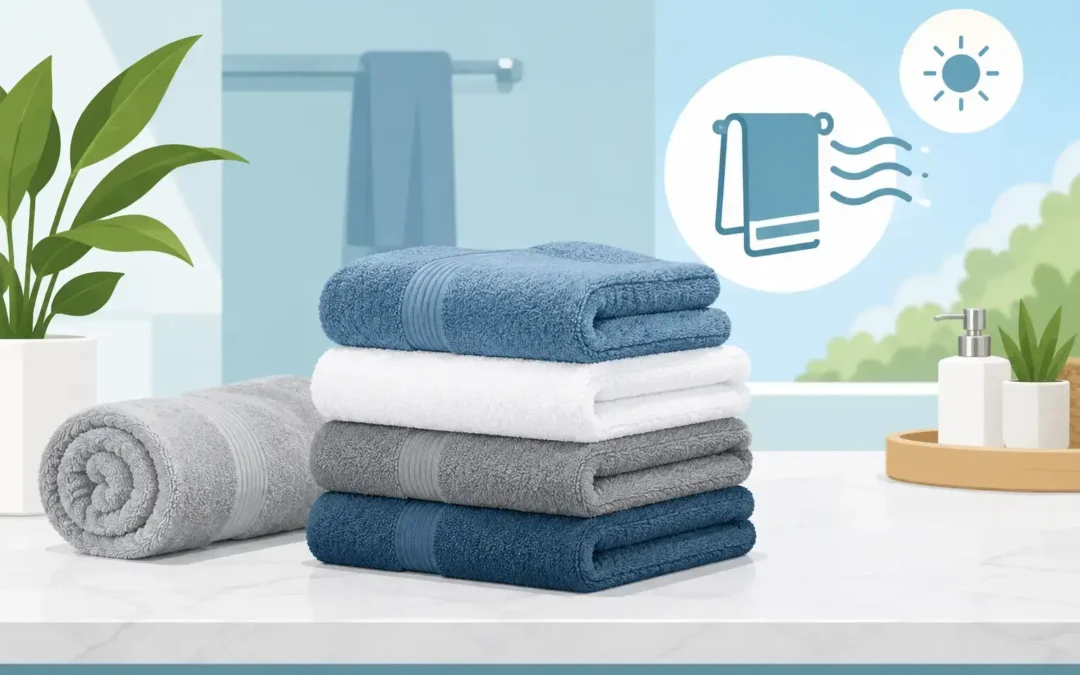
A towel that is still damp when the next guest, client, or family member needs it creates an immediate problem. It can feel unpleasant, develop odor, and add pressure to an already busy laundry cycle. When buyers ask which towels dry fastest, the answer is usually not one single towel type. Drying speed depends on fiber, towel weight, construction, room conditions, and how the towel will be laundered and used.
For high-turnover operations, the best choice is often a lighter commercial towel with a practical weave rather than the thickest, most luxurious option. For homes, pool areas, gyms, spas, and hospitality properties, the right balance is fast drying, sufficient absorbency, durability, and a professional feel.
Which Towels Dry Fastest by Material?
Microfiber towels generally dry the fastest. Their fine synthetic fibers hold less total water than a heavy cotton terry towel, especially when the towel is lightweight. A microfiber towel can be a sensible choice for fitness centers, cleaning programs, pool operations, travel use, and any setting where towels must be washed and reused quickly.
However, microfiber does not have the same familiar feel as a traditional cotton bath towel. It can also attract lint, static, and oils if it is not washed correctly. For body towels, some guests and customers prefer cotton’s natural softness and absorbency. Microfiber is best selected when quick turnaround and compact storage matter more than a plush bath experience.
Lightweight cotton towels are the strongest all-around option for many hotels, motels, salons, clinics, and residential properties. Cotton absorbs water well, feels natural against the skin, and performs reliably in commercial laundry. A lighter cotton terry towel will dry much faster than a dense, oversized luxury towel while still providing the guest comfort most operations need.
Cotton-polyester blends can also offer a practical middle ground. Polyester helps the towel dry faster and can support durability through repeated washing. The trade-off is that blends may not feel as soft or absorbent as an all-cotton towel. For utility towels, hand towels, and high-volume institutional use, that trade-off may be worthwhile.
Towel Weight Has a Major Effect on Drying Time
Towel weight is commonly measured in grams per square meter, or GSM. Higher GSM usually means more fiber packed into each square yard of towel. That extra fiber creates a fuller, heavier feel, but it also retains more water and takes longer to dry.
A towel in the approximate 300 to 400 GSM range is usually quicker to dry and easier to process in volume than a premium 600 GSM or heavier towel. This makes lighter towels a practical fit for gyms, motels, schools, residential-care facilities, and other properties with frequent use and limited laundry capacity.
Midweight towels, often around 400 to 550 GSM, are a dependable compromise. They provide a more substantial hand than economy towels while remaining easier to dry than luxury-weight terry. Many hospitality buyers choose this range for standard bath programs because it supports a clean, comfortable guest experience without creating excessive dryer time.
Heavyweight luxury towels can feel excellent, particularly in upscale spas, boutique lodging, and premium home bathrooms. But a thick towel is not automatically the better operational choice. It requires more dryer capacity, may remain damp longer in guest rooms, and can add labor and utility costs over hundreds of laundry loads.
Weave and Construction Matter as Much as Fiber
A towel’s surface construction affects how air moves through it and how much water it can hold. Traditional terry towels use loops to create absorbency. More loops and denser pile can make a towel feel plush, but they also give moisture more places to remain.
Waffle-weave towels tend to dry quickly because their textured grid construction allows better airflow. They are typically lighter and less bulky than thick terry. Waffle towels are a good option for spas, kitchens, pool areas, and home use where a clean, modern appearance and faster drying are priorities. They may not provide the same cushioned feel as a dense bath towel.
Flat-woven towels and Turkish-style towels also dry quickly because they have less pile. These towels can work well as beach towels, pool towels, travel towels, or decorative guest towels. Their lower bulk makes them easy to fold and store, though they may not meet the absorbency expectations of a traditional hotel bath towel.
For standard bath towels, a lower-pile terry construction is often the practical choice. It maintains the expected towel texture while reducing dry time compared with a dense, high-pile luxury towel.
Fast-Drying Towels for Different Applications
The intended environment should guide the purchase. A fast-drying towel for a gym is not necessarily the right towel for a day spa or an upscale guest room.
Hotels and motels usually need midweight cotton terry towels that can stand up to frequent commercial laundering. A standard-size bath towel in a practical weight helps control linen replacement, dryer time, and storage requirements. Hand towels and wash cloths should be selected from the same program when a consistent appearance matters.
Gyms and fitness centers often benefit from lightweight cotton or microfiber towels. The priority is usually frequent turnover, quick drying, and an economical replacement cost. White towels make it easier to monitor cleanliness and bleach when appropriate, but colored towels may help separate departments or usage areas.
Spas and salons need to balance presentation with performance. Lightweight to midweight cotton towels work well for backbar and treatment use, while waffle towels can suit specialty applications. Very heavy towels may feel premium, but they can slow down same-day processing during busy appointment schedules.
Pool facilities and beach programs need towels that release moisture quickly after use and laundering. Lightweight cotton cabana towels, flat-woven towels, and selected microfiber options are often better choices than thick bath towels. A larger size may still be necessary for guest comfort, so choosing a lighter construction becomes even more important.
Health care, clinics, schools, and residential-care settings should prioritize dependable, first-quality towels that tolerate repeated laundering. A modest-weight cotton towel is usually easier to handle, dry, and replace within a controlled operating budget.
Do Not Confuse Fast Drying With Low Absorbency
The fastest-drying towel is not always the most useful towel. A very thin towel may dry rapidly because it does not hold much water in the first place. That may be acceptable for a workout towel or cleaning cloth, but it can disappoint a guest who expects a bath towel to absorb water efficiently.
The better question is whether the towel dries fast enough for the application while providing the absorbency and feel users expect. In most commercial bath programs, lightweight or midweight cotton terry offers that balance. In applications where towels are frequently dampened, such as pool decks or workout floors, microfiber and low-bulk construction may be more efficient.
Towel size also affects results. An oversized bath sheet naturally holds more water and takes longer to dry than a standard bath towel made from the same material and weight. If laundry throughput is a concern, selecting a standard size can make a noticeable difference without sacrificing a professional presentation.
Laundry Practices Can Slow Down Any Towel
Even a fast-drying towel can become slow to dry when laundry practices are working against it. Overloading washers prevents proper extraction, leaving towels excessively wet before they reach the dryer. Overloading dryers reduces airflow and lengthens cycle times. Both can increase energy use and leave towels feeling stiff or under-dried.
Fabric softener is another common issue. Repeated use can coat towel fibers, reducing absorbency and making cotton towels less effective. It may create a temporarily soft feel, but it can shorten practical performance over time. Use detergent amounts appropriate for the load, avoid unnecessary softener buildup, and make sure towels are fully dry before folding and storing.
Regularly inspect towels for thinning, snags, stains, and loss of absorbency. Replacing worn towels before they look tired helps protect guest perception and keeps the linen program consistent. First-quality towels are especially important when purchasing for repeated use because construction quality affects how well a towel holds up through laundering.
Choose for Your Drying Capacity, Not Just Shelf Appeal
Plush towels sell on feel, but towel programs succeed on repeatable performance. Before ordering, consider the available washer and dryer capacity, how many turns each towel will make per day, the storage space on hand, and the experience you want users to have. A compact gym with limited drying equipment needs a different towel program than a luxury inn with a dedicated laundry room.
For most buyers, lightweight microfiber dries fastest, while lightweight cotton and lower-pile cotton terry provide the best fast-drying option for regular bath use. If you need a more substantial presentation, choose a midweight towel rather than moving directly to the heaviest luxury grade. Selecting the towel around the actual workload will keep laundry moving and help every clean towel feel ready when it is needed.