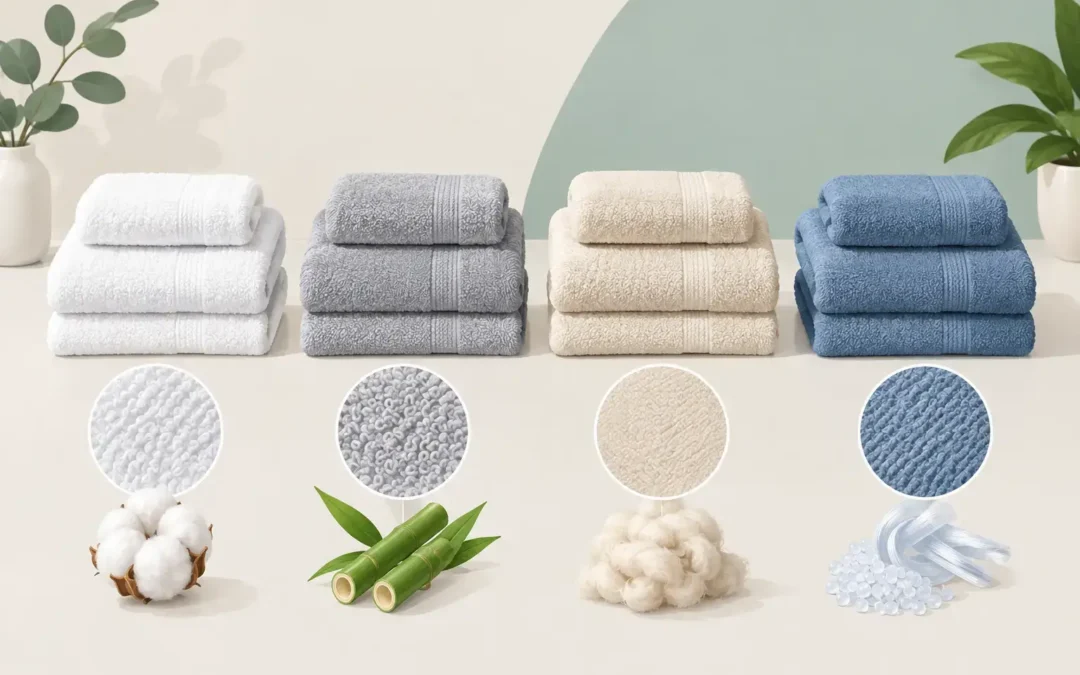
A towel that feels substantial on the shelf can still be the wrong purchase for a laundry room, guest bath, fitness center, or treatment room. Towel materials determine more than softness. They affect absorbency, dry time, linting, laundering results, replacement frequency, and the impression left with a guest or client.
For commercial buyers, the best choice is rarely the most expensive towel or the heaviest one. It is the towel that fits the application, wash schedule, budget, and expected service life. A day spa may prioritize a plush cotton bath towel, while a gym needs fast-turning, durable inventory that can withstand constant use. Home buyers face the same practical question on a smaller scale: what will perform well after repeated washing?
Towel Materials and What They Change
Most bath, hand, and wash towels are made from cotton, but the type of cotton, yarn construction, pile, and fabric weight can make two cotton towels perform very differently. Microfiber and cotton-polyester blends also have useful roles, especially in cleaning, athletic facilities, and operations where quick drying matters.
Material is only one part of the specification. Weight is commonly described in grams per square meter, or GSM. A heavier towel usually has more fabric and can feel fuller, but it may take longer to dry and add more weight to each laundry load. Size, border construction, hem quality, color, and care practices also affect value over time.
Cotton: The Standard for Bath Towels
Cotton remains the preferred material for most bath towels because it absorbs water well, feels comfortable against the skin, and handles regular laundering. It is a practical choice for hotels, motels, hospitals, salons, spas, residential-care facilities, and households.
Basic cotton towels are available across a wide range of weights and price points. They are often the right fit for high-volume operations that need a dependable, familiar towel without paying for luxury fiber claims. For these settings, first-quality construction matters. Consistent weaving, secure hems, and reliable dimensions help a towel hold up through repeat wash cycles.
Cotton does have trade-offs. It generally dries more slowly than microfiber, and low-quality cotton towels can shed lint, become rough, or lose their shape quickly. Proper laundering is part of protecting the investment. Excessive bleach, over-drying, and too much fabric softener can shorten towel life and reduce absorbency.
Ring-Spun and Combed Cotton
Ring-spun cotton uses a yarn-spinning process that produces a smoother, finer yarn than conventional open-end yarn. Towels made with ring-spun cotton typically feel softer and more refined, making them a strong option for better hotels, bed-and-breakfasts, salons, and homes where touch matters.
Combed cotton is processed to remove shorter fibers before spinning. The result is a cleaner, smoother yarn with less lint potential. A towel may be described as ring-spun, combed, or both. These terms are useful indicators of feel and finish, but buyers should still compare actual towel weight, construction, and intended use.
For a property seeking a step up from basic institutional inventory, ring-spun or combed cotton can improve the guest experience without moving into the highest luxury tier. It may cost more upfront, but the better feel can be worthwhile where towels are part of the service standard.
Turkish and Long-Staple Cotton
Turkish cotton is known for long fibers that can produce soft, absorbent towels with a smooth finish. It is commonly selected for premium bath programs, upscale hospitality, and home use. Long-staple cotton refers to fiber length rather than a single country of origin. Longer fibers can be spun into finer, stronger yarns with fewer exposed ends.
These premium cotton options often offer a fuller hand and polished appearance. They are well suited to luxury bath towels, spa towels, robes, and guest-facing environments where comfort is highly visible. The trade-off is price and, in many cases, longer drying time because premium towels are often made with a denser, deeper pile.
Not every operation needs premium cotton. A pool facility or busy fitness center may get more value from a medium-weight, durable cotton towel that dries and processes efficiently. Reserve luxury towels for locations where the guest experience supports the added cost.
Microfiber Towel Materials for Cleaning and Drying
Microfiber is made from very fine synthetic fibers, usually polyester and polyamide. It is not generally the first choice for a traditional bath towel, but it is highly effective for cleaning cloths, bar mops, gym wipes, housekeeping tasks, and specialized quick-dry applications.
Its fine fibers pick up dust, oils, and moisture efficiently, often with less chemical cleaner. Microfiber also dries quickly, which can help reduce damp-storage issues between uses. For housekeeping teams, custodial departments, automotive cleaning, and food-service support, microfiber cloths can be an efficient operational tool.
The limitations are equally practical. Microfiber can hold onto lint and oils if it is washed improperly, and it should not be laundered with cotton towels that shed lint. High heat and fabric softener can damage performance. It also has a different hand than cotton, so it is usually not appropriate when a soft, traditional guest bath towel is expected.
Cotton-Polyester Blends
Cotton-polyester blends combine some of cotton’s absorbency and natural feel with polyester’s strength, quicker drying, and dimensional stability. These blends can work well for utility towels, institutional items, kitchen towels, and applications where durability and cost control are the main priorities.
Because polyester absorbs less moisture than cotton, a blend may not feel as absorbent as a 100% cotton bath towel. Still, it can dry faster and resist shrinkage better. The right blend is often a sensible middle ground for operations that wash towels frequently and need predictable replacement costs.
For guest bath use, compare samples or specifications carefully. The blend percentage, pile construction, and weight determine whether the towel feels suitable for customer-facing use. A blend that performs well in a maintenance department may not match the standards of a boutique lodging property.
Match the Material to the Application
Start with where the towel will be used, how often it will be washed, and what the user expects when they pick it up. A hotel may need separate programs for guest rooms, fitness areas, housekeeping, and pool service. Treating all towel needs as one category can lead to overspending in some areas and disappointing performance in others.
For hotels, motels, and bed-and-breakfasts, 100% cotton is usually the foundation. Medium-weight cotton works well for value-focused guest rooms, while ring-spun, combed, or long-staple cotton supports a more premium presentation. White towels remain common because they are easy to sort, bleach when appropriate, and replace consistently.
Spas, salons, and massage practices often need soft cotton towels that hold up to oils, lotions, and frequent laundering. Dark colors may be useful for makeup, hair color, or treatment-room tasks, but color care needs attention to prevent fading. A separate supply of economical treatment towels can protect premium guest towels from heavy product exposure.
Gyms, pools, and recreational centers usually benefit from practical cotton towels with reliable durability, or from quick-drying synthetic options for specific uses. Consider loss rates as well as wash performance. A very expensive towel may not be the best operating choice in a high-traffic self-service environment.
Health care, residential care, and education settings typically prioritize repeatable performance, hygiene practices, and manageable laundry loads. First-quality cotton or suitable blends can provide dependable service when matched to the facility’s wash process. The goal is not simply softness. It is consistent availability and performance shift after shift.
At home, choose based on preference and laundry habits. A heavier premium cotton towel can feel excellent in a primary bath where it has time to dry. A lighter cotton towel may be more practical for children, guest rooms, travel, or humid climates. Microfiber is best kept for cleaning and specialty uses rather than replacing everyday bath towels.
Buy for Total Cost, Not Shelf Price
A lower-priced towel that thins out, unravels, or loses absorbency early is not always the value choice. On the other hand, a luxury towel is not automatically the best commercial purchase. Review unit price alongside expected wash cycles, drying time, replacement rate, and the standard your guests or clients expect.
Ask for the specifications that matter: fiber content, towel weight, dimensions, construction, color, and recommended care. For larger programs, standardizing a few dependable towel types makes ordering, sorting, training, and replacement easier. United Textile Supply focuses on first-quality merchandise so buyers can choose among value, institutional, and premium towel programs with clearer expectations.
The right towel material should make the daily routine easier, whether that means a guest reaches for a soft bath towel, a housekeeper finishes rooms on schedule, or a home laundry basket dries before the next load. Choose the fiber and weight that fit the work the towel must do, then give it the care needed to earn its place in your inventory.