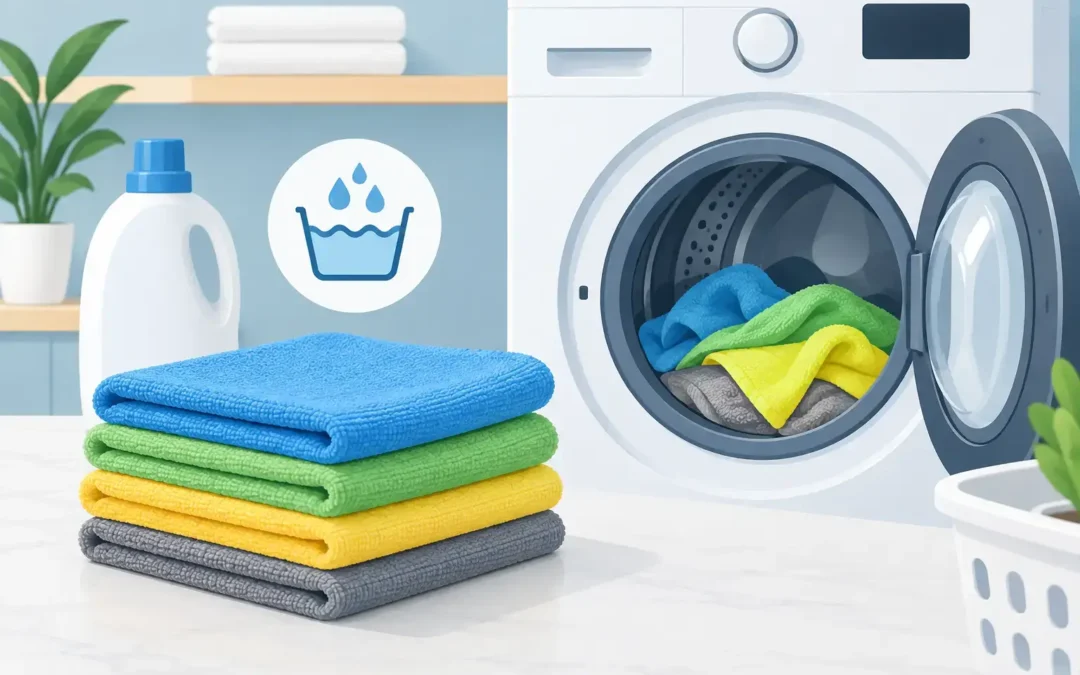
Microfiber earns its place in a cleaning program because it lifts dust, absorbs spills, and leaves glass and hard surfaces with less lint. But that performance depends on proper laundry practices. To wash microfiber cloths correctly, protect the fibers from heat, fabric softener, lint, and heavy soil that can reduce their cleaning ability.
For a hotel housekeeping department, salon, fitness center, clinic, or household, the goal is simple: return clean, absorbent cloths to service without turning a reusable supply into a streaking problem. The right process also helps control replacement costs. A commercial-grade microfiber cloth can withstand repeated laundering when it is sorted, washed, and dried for its intended use.
Why microfiber needs different laundry handling
Microfiber is made from very fine synthetic filaments, commonly polyester and polyamide. Those tiny fibers create a large surface area that captures oils, dust, moisture, and cleaning residue. That is why microfiber performs well on mirrors, counters, stainless steel, fixtures, and other surfaces where cotton can leave lint behind.
The same structure makes microfiber vulnerable to laundry mistakes. Fabric softener and dryer sheets coat the fibers, reducing absorbency and pickup. High heat can damage or tighten the filaments. Cotton towels shed lint that clings to microfiber and transfers back to the next surface being cleaned. Washing cloths with heavily soiled mop heads, uniforms, or shop rags can leave behind grease and debris that ordinary detergent may not fully remove.
A cloth can look clean and still perform poorly. If it smears a mirror, feels less absorbent, or carries a waxy texture, residue is often the cause.
Sort microfiber by use before loading the washer
Do not treat all cleaning cloths as one load. Separate microfiber from cotton terry, bar mops, bath towels, and other lint-producing linens. This one step prevents many avoidable performance issues.
It also makes sense to sort microfiber according to the type of work it has done. Glass and polishing cloths should be kept separate from cloths used for restrooms, break rooms, kitchen cleanup, automotive work, or oily maintenance tasks. Facilities that use color-coded cloths can keep that system in place through the laundry process. For example, cloths assigned to restrooms should not be mixed with those used on guest-room furniture or food-service counters.
If a load includes only lightly soiled dusting and glass cloths, it may need less detergent and a shorter cycle. A load used for body oils, cosmetics, disinfectant residue, or food-service cleanup may require a more thorough wash. Sorting by soil level is useful when volume allows, particularly for spas, gyms, and housekeeping operations that launder cloths daily.
How to wash microfiber cloths correctly
Shake out loose debris first
Before loading, shake each cloth over a waste container or outdoors when practical. Remove hair, paper particles, adhesive labels, and large debris. This prevents material from circulating through the wash and becoming embedded in other cloths.
Do not overload the machine. Microfiber needs enough water movement to release soil and rinse clean. A tightly packed washer can leave detergent, oils, and cleaning-product residue in the cloths. In high-volume operations, several correctly sized loads are usually better than one overloaded load that has to be rewashed.
Use cool or warm water, not high heat
Cool to warm water is generally the right range for microfiber. It is effective for regular cleaning while being easier on the synthetic fibers than hot water. Warm water can be especially useful for cloths carrying body oils or heavier cleaning residue, but there is rarely a reason to use the hottest setting available.
Follow local hygiene requirements and the chemical label directions used in your operation. If a facility must use a specific wash temperature or sanitizing process, test a small group of cloths first and monitor absorbency, texture, and appearance over repeated cycles. The correct setting depends on both the cloth construction and the type of contamination being removed.
Choose a simple liquid detergent
Use a modest amount of liquid laundry detergent with no added fabric softener, fragrance oils, or conditioning ingredients. Liquid detergent is often preferable because it dissolves more easily and is less likely to leave powder residue in a densely packed microfiber load.
More detergent is not better. Excess detergent can stay in the fibers and create streaks on glass, chrome, mirrors, and polished surfaces. If your water is hard, an extra rinse may be more useful than adding more detergent. For institutional laundry, consistent measuring matters. Staff should use the same detergent amount for comparable load sizes rather than pouring by eye.
Avoid bleach unless the microfiber manufacturer’s care instructions specifically allow it. Chlorine bleach can weaken fibers and shorten useful life. It is also best to avoid laundry additives marketed for softness, scent, or static control. Microfiber cloths do not need to feel fluffy to clean well. They need open, residue-free fibers.
Select a regular wash cycle and rinse thoroughly
A standard cycle is suitable for most microfiber loads. Use a longer or heavier cycle only when the cloths are genuinely soiled. Very aggressive washing is not automatically better and can add unnecessary wear over time.
An extra rinse is a practical choice for cloths used on windows, mirrors, display cases, stainless fixtures, or other surfaces where even a small amount of detergent can show. If streaking occurs after laundering, improve rinsing before replacing otherwise sound cloths.
Dry microfiber with low heat or air drying
Low heat is the safer machine-drying option. Remove cloths promptly when the cycle ends so they do not sit compressed and collect lint from other laundry. Air drying also works well, especially for smaller household loads or specialty cloths used for polishing.
Do not use dryer sheets. Like fabric softener, they leave a coating that can reduce absorbency and cause smearing. Avoid high dryer heat as well. Heat damage may not be obvious after one load, but repeated exposure can make cloths stiff, less effective, and more likely to wear out early.
For facilities with mixed laundry, clean the dryer lint filter before drying microfiber. A lint-free washer load can still pick up cotton fibers in a dryer that has just handled towels, blankets, or uniforms.
Handling grease, wax, cosmetics, and heavy soil
Some microfiber cloths need more than a standard wash. Cloths used for kitchen grease, vehicle detailing, hair products, makeup, massage oils, or maintenance tasks should be pretreated based on the soil involved. Apply a compatible cleaner or a small amount of liquid detergent to the affected area, then allow it to work briefly before laundering.
Keep heavily contaminated cloths out of routine glass or general-purpose microfiber loads. If a cloth has been used with paint, solvent, strong adhesive, or an unknown industrial chemical, follow your workplace safety procedures. In some cases, replacement is the safer and more cost-effective choice than attempting to restore the cloth.
Odor is another sign that a load needs attention. Musty-smelling microfiber is often the result of cloths being left wet in a closed hamper, cart, or washer. Wash those cloths promptly, use adequate rinsing, and make sure they are completely dry before storage. Clean cloths should be stored in a dry, covered area away from chemicals, dust, and moisture.
When to replace microfiber cloths
Microfiber is reusable, not permanent. Replace cloths when they no longer pick up dust effectively, remain streaky after proper washing, develop permanent staining that creates a cross-contamination concern, or show fraying, holes, and thinning. A cloth that has lost its texture or absorbency can slow cleaning staff down and leave a less professional result.
For purchasing, consider the application rather than choosing only by initial price. Lightweight cloths may be appropriate for routine dusting and short-turn cleaning. Heavier commercial-grade microfiber may deliver better value where staff use and launder the same cloths frequently. Consistent sizing and color coding can also make it easier to train employees and maintain a dependable cleaning system.
Good microfiber care is a small operational detail with a visible payoff. Keep cloths separated from lint-producing laundry, use simple detergent, rinse well, and stay away from softeners and high heat. The result is a cleaner finish, longer cloth life, and a supply that is ready for the next room, treatment area, guest space, or household task.