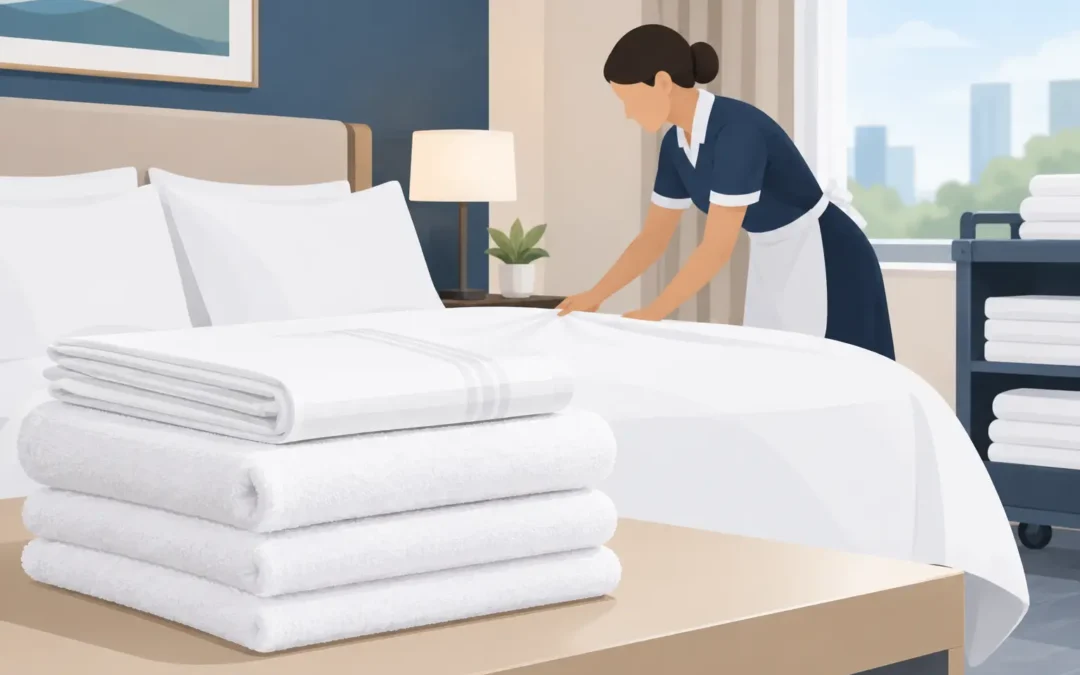
A guest may not know the thread count of a sheet or the ounce weight of a bath towel, but they notice the result immediately. Thin towels feel worn before they are used. Rough sheets and undersized blankets make a room feel less cared for. For operators, the right hotel linens have to do more than look good on the bed or bath rack. They need to survive repeated commercial laundering, stay available through busy turnover periods, and fit the property’s service level and budget.
Buying on price alone often creates a more expensive problem later. A lower-cost towel that loses absorbency, frays at the edges, or needs early replacement can raise labor and replacement costs. A better approach is to match each linen category to its actual application, then maintain enough inventory to keep rooms, laundry, and storage working without interruption.
Start With the Service Level You Need
There is no single correct linen specification for every property. A limited-service motel, extended-stay hotel, boutique inn, resort, and bed-and-breakfast can all make sensible but different choices. The deciding factors are guest expectations, occupancy patterns, laundry method, room rate, and replacement budget.
A value-focused property may need dependable institutional towels and sheets that can handle frequent washing with a practical replacement cost. A property that sells a more upscale stay may place greater emphasis on heavier towels, softer cotton, plusher blankets, and a more finished bed presentation. Both approaches work when the product is first quality and selected for the workload.
It also helps to separate guest-facing items from back-of-house needs. Bath towels, hand towels, wash cloths, sheets, pillowcases, blankets, comforters, bath mats, and bathrobes affect the guest experience directly. Bar mops, microfiber cleaning cloths, utility towels, and table linens support operations but still need consistent sizing and dependable supply.
Hotel Linens: Choose the Right Fabric and Weight
Fabric construction and weight affect feel, drying time, durability, and cost. The best choice depends on where the item will be used and how it will be processed after use.
Towels should balance absorbency and turnover
Cotton towels remain a standard choice because they are absorbent, familiar to guests, and available in a wide range of weights. In general, a heavier towel offers a fuller feel and greater absorbency, while a lighter towel dries more quickly and can be easier on laundry capacity. Heavier is not automatically better if your laundry operation is already tight on drying time or if towels are used heavily at a pool, gym, or housekeeping station.
For regular hotel guest rooms, select bath towels, hand towels, and wash cloths as a coordinated family whenever possible. Matching weight, color, and construction gives the room a consistent appearance and makes replacement ordering simpler. Bath mats deserve separate consideration. They need enough weight and absorbency to perform on wet floors, but they should also tolerate frequent laundering without becoming misshapen.
Luxury cotton towel options can be appropriate for premium rooms, spas, clubs, and properties where the bath experience is part of the brand promise. For high-volume or value-conscious operations, institutional-grade towels can provide the right balance of performance and cost. The key is not to mix expectations: a budget towel should not be asked to deliver a luxury presentation, and a premium towel should not be purchased if the operation cannot properly wash and dry it.
Sheets need strength as well as a clean hand
Sheets and pillowcases face a different kind of wear. They are pulled tight over mattresses, exposed to body oils and stains, and washed repeatedly. Cotton-rich and blended sheeting both have a place in lodging operations. Cotton provides a traditional feel, while polyester blends can offer wrinkle resistance, color retention, and practical durability.
Thread count gets attention, but it should not be the only buying measure. A sheet with appropriate fabric weight, sound stitching, dependable dimensions, and a finish that holds up after laundering is more useful than a high thread-count claim without commercial performance. Confirm fitted-sheet pocket depth before ordering. A fitted sheet that does not fit the mattress, mattress pad, and topper securely will slow housekeeping and look untidy after the first night.
White sheets remain common because they communicate cleanliness, work with most room designs, and simplify sorting. Colored or patterned bedding may support a particular decor, but it can make matching replacement pieces more difficult over time. If color is part of the room program, establish a consistent reorder plan rather than purchasing similar-looking items as needed.
Bedding should match the room and the climate
Blankets, comforters, mattress pads, and pillows should be chosen as a system. A basic blanket may be the practical solution for high-turn rooms or warm climates. A comforter can create a more finished presentation, but it also adds cleaning, storage, and replacement considerations. Many properties use a washable blanket or coverlet with a bedspread or comforter layer, adjusting the combination by season.
Mattress pads help protect the mattress and improve the bed’s feel, but they must fit securely and hold their shape through washing. Pillows should be selected for support, cleanability, and planned replacement intervals. The lowest initial price is rarely a good value if pillows flatten quickly or mattress pads shift during use.
Buy for Your Laundry Process, Not Just the Room
The laundry room determines whether a linen program succeeds. Before choosing a new towel or sheet line, consider washer capacity, dryer capacity, chemical use, water temperature, folding equipment, and staffing. A product that looks excellent when new can become a poor fit if it takes too long to dry or requires handling your team cannot maintain consistently.
Use manufacturer care guidance as a starting point, then review your own results. Excessive bleach, high heat, overloaded machines, and rough handling shorten the life of even good textiles. A consistent wash process protects the investment and helps linens retain color, shape, softness, and absorbency.
Stain control also matters. Keep heavily soiled cleaning textiles separate from guest linens. Use distinct collection and sorting practices for kitchen cloths, pool towels, spa items, and bedding. This supports hygiene and prevents lint, grease, or chemical residue from reaching items intended for guest rooms.
Set a Par Level That Prevents Shortages
A well-chosen product line still fails when inventory is too shallow. Par level is the quantity needed to keep operations moving while one set is in use, another is in laundry, and additional stock is ready for the next turnover. Many lodging operations work from a three-par system, but the right number depends on occupancy, turnaround speed, delivery timing, and whether laundry is processed on-site or off-site.
For example, a property with frequent same-day turnovers and limited laundry capacity may need more reserve than a property with steady occupancy and a large on-site laundry room. Seasonal demand, group bookings, pool use, and long weekends can change the requirement quickly. Review usage by category rather than assuming towels, sheets, and blankets all need the same reserve level.
Keep replacement inventory organized by item, size, and color. Count losses and discard reasons when possible. If wash cloths disappear faster than bath towels, or fitted sheets fail before flat sheets, that information helps you adjust the next order instead of replacing everything at the same rate.
Standardize Where It Helps, Upgrade Where It Shows
Standardization makes purchasing and housekeeping easier. Use consistent towel sizes, bed sheet dimensions, and core colors across comparable rooms. It reduces sorting errors, makes staff training simpler, and allows you to reorder with confidence. United Textile Supply offers first-quality selections across value, institutional, and luxury tiers, allowing buyers to build a practical base program without giving up the option to upgrade selected areas.
At the same time, not every room requires the same specification. Premium suites, spa treatment rooms, executive accommodations, and special-event spaces may justify a higher-end towel or bedding package. Put the upgrade where guests will notice it and where the added cost supports the rate or experience you provide.
Before placing a larger order, test a manageable quantity under normal operating conditions. Wash it, dry it, make beds with it, fold it, and ask housekeeping for direct feedback. The right hotel linens are the ones your guests appreciate and your staff can process reliably shift after shift. Start with the application, keep your specifications consistent, and leave enough room in the budget for quality that lasts.