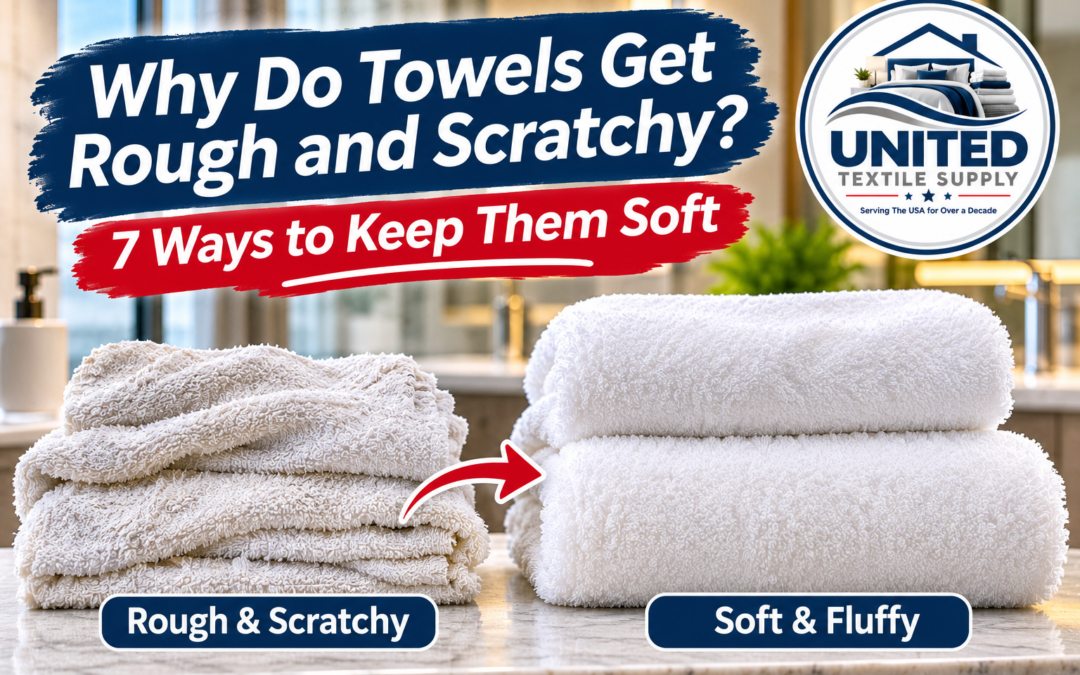
Why Do Hotel Towels Get Rough and Scratchy? 7 Ways to Keep Them Soft
Remember when your towels were brand new?
They were soft, fluffy, absorbent, and felt wonderful against your skin.
Fast forward a few months, and suddenly those same towels feel more like sandpaper than something you’d want to wrap around yourself after a shower.
What happened?
And why do towels get rough even when you’re washing them regularly?
It’s a problem that affects households everywhere, but it’s particularly frustrating for hotels, motels, spas, and gyms where towels are washed almost constantly.
The good news is that rough towels aren’t always worn out. Sometimes, a few simple changes to your laundry routine can make a noticeable difference.
Let’s look at seven common reasons towels lose their softness and what you can do about them.
1. You’re Using Too Much Laundry Detergent
Here’s something that surprises plenty of people.
More detergent doesn’t necessarily mean cleaner towels.
In fact, using excessive amounts can leave detergent residue trapped in the fabric.
Over time, that buildup can make towel fibers feel stiff, heavy, and uncomfortable.
This is particularly common when washing machines are overloaded or don’t rinse thoroughly.
How to fix it
Follow the detergent manufacturer’s recommended dosage based on your load size, water hardness, and washing machine.
If your towels feel stiff or soapy after washing, try an additional rinse cycle.
You might be surprised how much softer they feel once the residue is removed.
2. Fabric Softener Can Actually Make Towels Worse
Wait a minute.
Isn’t fabric softener supposed to make things softer?
Yes, but there’s a catch.
Many traditional fabric softeners work by coating fabric fibers with conditioning ingredients.
While this can create a softer feel initially, repeated use may leave buildup that reduces a towel’s absorbency.
Eventually, your towels might feel coated rather than naturally fluffy.
For hotels and spas, that’s a problem because towels need to absorb moisture efficiently.
How to fix it
Consider reducing or eliminating fabric softener when washing towels.
Instead, focus on proper detergent dosing, thorough rinsing, and appropriate drying.
Good-quality towels should be comfortable without needing excessive fabric treatments.
3. Hard Water Could Be the Culprit
Have you ever noticed white deposits around your faucets, showerhead, or kettle?
That could be a sign of hard water.
Hard water contains dissolved minerals, primarily calcium and magnesium.
These minerals can interfere with detergent performance and contribute to deposits on fabrics.
As a result, towels may gradually feel rougher or less comfortable.
Hard water can be an issue in different parts of the United States, although conditions vary significantly by location and water source.
How to fix it
If you suspect hard water, consider having your water tested.
Use a laundry detergent formulated to perform in your water conditions, and follow the recommended dosage.
Where appropriate, a water-softening system or suitable laundry treatment may help reduce mineral-related problems.
For commercial laundries, understanding local water quality can be an important part of maintaining consistent towel performance.
4. You’re Overloading the Washing Machine
We’ve all tried to squeeze one more towel into the washer.
Unfortunately, towels need room to move.
When a washing machine is overloaded, water and detergent may not circulate effectively.
That means towels might not be cleaned or rinsed properly.
Leftover detergent, body oils, and other residues can contribute to stiffness.
How to fix it
Avoid packing the drum too tightly.
Follow the washing machine manufacturer’s load recommendations, particularly when washing bulky bath towels.
For commercial operators, remember that towels become considerably heavier when wet.
Proper loading helps maintain washing performance and can reduce unnecessary strain on laundry equipment.
5. Too Much Heat Can Damage Towel Fibers
High temperatures might seem like the perfect solution for getting towels clean and dry.
However, excessive heat can gradually damage certain fibers and finishes.
Overdrying can also leave towels feeling harsh, particularly when combined with repeated commercial laundering.
How to fix it
Always check the care label before selecting washing and drying temperatures.
Use the appropriate dryer setting and avoid running towels through unnecessarily long drying cycles.
Remove towels once they’re dry rather than leaving them tumbling for extended periods.
Commercial laundries should follow their textile suppliers’ care recommendations and established hygiene procedures.
The aim is to dry towels thoroughly without exposing them to more heat than necessary.
6. Your Towels May Be Losing Their Natural Fluffiness
Towels don’t stay new forever.
Every time a towel is washed, dried, folded, and used, its fibers experience some wear.
Over time, the loops that give terry towels their soft, fluffy texture may become flattened, tangled, or damaged.
This can make towels feel thinner, less absorbent, and less comfortable.
It’s particularly noticeable in heavily used hotel and gym towels.
How to fix it
Shake towels gently before drying to help loosen the fabric.
Avoid unnecessarily harsh laundering conditions and handle towels according to their care instructions.
Inspect commercial towel inventory regularly for thinning fabric, damaged loops, and reduced absorbency.
If the fibers are permanently worn, laundering adjustments won’t restore the towel to its original condition.
7. You’re Buying Towels That Aren’t Suited to Frequent Washing
Not all towels are made for the same purpose.
A decorative towel used occasionally in a guest bathroom has different demands from one used daily in a busy hotel.
Commercial towels may undergo hundreds of laundering cycles throughout their working life.
That means construction, fabric composition, and durability matter.
A towel that feels wonderfully soft in the store isn’t necessarily the best choice for a high-turnover hospitality business.
How to fix it
When purchasing towels for commercial use, consider:
- Fabric composition and construction.
- Absorbency and drying performance.
- Suitability for frequent laundering.
- Weight and storage requirements.
- Comfort and expected service life.
Rather than choosing towels based on softness alone, look for a balance between guest comfort, practicality, and long-term value.
Can You Make Rough Towels Soft Again?
Sometimes, yes.
If your towels have become stiff because of detergent residue, mineral deposits, or poor rinsing, improving your laundry routine may help restore some softness.
Try the following:
- Check the towel’s care label.
- Clean your washing machine if needed.
- Wash towels without overloading the drum.
- Use the correct amount of detergent.
- Skip fabric softener for a few washes.
- Add an extra rinse if residue is suspected.
- Dry towels completely using the recommended setting.
However, there’s an important distinction.
Residue-related stiffness may improve, but permanently damaged fibers cannot simply be repaired by washing.
If towels remain rough, thin, or uncomfortable after proper laundering, replacement may be the better option.
Why Soft Towels Matter So Much in Hotels and Spas
Imagine checking into a luxury hotel.
The room looks beautiful, the bathroom is spotless, and the shower is fantastic.
Then you reach for a towel.
It’s stiff, scratchy, and uncomfortable.
Not exactly the luxurious experience you were expecting.
For hotels, motels, spas, and other hospitality businesses, towels are an important part of the customer experience.
Guests expect towels to be clean, absorbent, comfortable, and well maintained.
Even a relatively small detail, such as towel softness, can influence how guests perceive the quality of their accommodation.
That’s why commercial towel selection and laundering procedures deserve careful consideration.
How Often Should Hotels Replace Their Towels?
There’s no universal replacement schedule that works for every property.
A luxury hotel may have different standards from a budget motel, while a busy fitness center may experience particularly heavy towel usage.
Instead of relying exclusively on age, inspect towels for signs of deterioration.
Common warning signs include:
- Persistent roughness after proper laundering.
- Thinning fabric.
- Frayed edges or damaged hems.
- Reduced absorbency.
- Permanent stains or discoloration.
- Unpleasant odors that remain after appropriate cleaning.
Replacing worn towels before they reach guest rooms helps maintain a consistent standard.
Find Quality Towels at United Textile Supply
At United Textile Supply, we understand that towels need to do more than look attractive on a bathroom shelf.
They need to feel comfortable, absorb moisture effectively, and withstand the demands of everyday use.
Based in Denver, Colorado, we supply towels and other textile essentials to hotels, motels, gyms, spas, and customers throughout the United States.
Whether you’re stocking a busy hospitality business or upgrading the towels in your home, choosing suitable products is an important first step.
Explore our selection of bath towels to compare options for your needs.
You can also browse our wholesale towel bargains for additional towel choices.
Final Thoughts: Softer Towels Start With Better Care
If your towels have become rough and scratchy, don’t automatically assume it’s time to throw them away.
The problem might be as simple as too much detergent, poor rinsing, hard water, or excessive drying heat.
Making a few adjustments can sometimes help restore softness and improve absorbency.
And when your towels finally reach the end of their useful life, selecting quality replacements suited to your needs can make all the difference.
Because whether you’re welcoming hotel guests or stepping out of your own shower, everyone deserves a towel that feels good against their skin.
Soft, clean, comfortable towels shouldn’t be a luxury. They should be the standard.