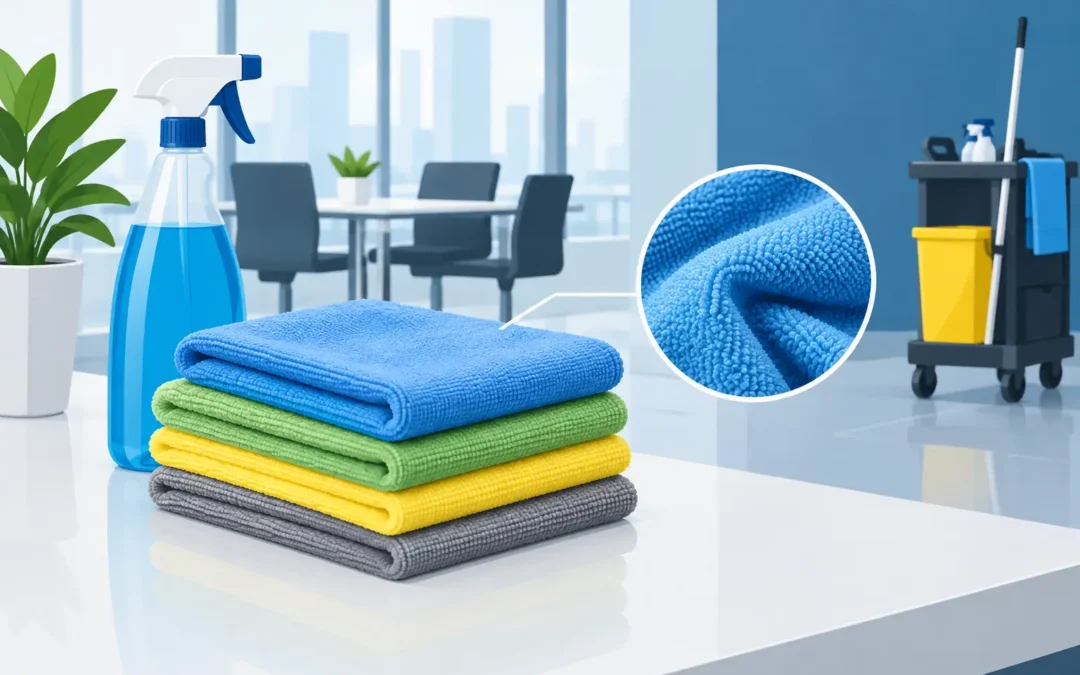
A cleaning cloth can affect labor time, chemical use, surface appearance, and replacement costs. Microfiber cloths are a practical choice for facilities that need consistent results across guest rooms, treatment areas, fitness equipment, restrooms, kitchens, and general maintenance work. The right cloth picks up dust, soil, and moisture efficiently without leaving lint behind. The wrong one can wear out early, streak glass, snag on rough surfaces, or create cross-contamination concerns.
For purchasing managers and owner-operators, the goal is not simply to buy the lowest-priced cloth. It is to select first-quality microfiber that fits the work, holds up through repeated laundering, and can be reordered consistently as your operation grows.
What Makes Microfiber Cloths Different?
Microfiber is made from very fine synthetic fibers, most often a blend of polyester and polyamide. Those fine fibers create more surface area than a standard cotton cleaning rag. When used dry, microfiber can attract and hold dust and fine particles. When used damp, it can lift oils, soil, and residue from many hard surfaces with less chemical solution.
That performance is especially useful where appearance and sanitation matter. Housekeeping teams can use microfiber on mirrors, fixtures, counters, furniture, and stainless steel. Spas and salons can use designated cloths for stations and product displays. Gyms can keep microfiber cloths at cleaning points for equipment wipe-downs. In each case, the cloth should match the surface and the cleaning process.
Microfiber is not automatically better for every task. Rough concrete, heavily abrasive work, or jobs involving sharp edges may shorten its life. Cotton bar mops can still be the sensible choice for certain spill cleanup, food-service work, and rugged utility jobs. A well-run linen program often uses both materials rather than forcing one product to handle every application.
Choose the Right Cloth for the Job
The most useful buying decision starts with the intended use. A general-purpose cloth can cover many day-to-day tasks, but specialty surfaces and high-volume operations often benefit from separating cloths by weight, weave, and color.
Weight affects absorbency and durability
Microfiber cloth weight is commonly expressed in grams per square meter, often shortened to GSM. A lighter cloth is easier to fold, carry, and use for quick dusting or light cleaning. It also dries quickly after washing. Medium-weight cloths are a dependable everyday option for counters, bathrooms, furniture, and general housekeeping.
Heavier microfiber cloths generally offer more absorbency and a fuller hand. They are a good fit for larger spills, vehicle care, detailed cleaning, and tasks where the cloth needs to stay effective through a longer shift. The trade-off is cost and drying time. More weight is not always necessary, particularly when a team uses many cloths per room or per route.
For a hotel, clinic, or school, medium-weight commercial microfiber usually provides a sensible balance of cost, durability, and everyday performance. For a premium spa, detailing operation, or higher-end housekeeping program, adding heavier cloths for selected tasks can improve the finish without overbuying across the entire operation.
Weave determines surface performance
Not all microfiber cloths feel or perform the same way. Terry-style microfiber has a thicker, looped texture that works well for general cleaning and moisture pickup. It is a common all-purpose choice because it handles routine soil effectively and is comfortable for repeated use.
Waffle-weave microfiber has raised pockets that help manage water. It is frequently selected for glass, drying, and damp surface work. Smooth or flat-weave cloths are often preferred for delicate surfaces, polishing, screens, mirrors, and stainless steel because they are less likely to leave lint or heavy texture marks.
For glass and mirrors, technique still matters. Use a clean cloth, avoid over-saturating it, and change to a dry section as it becomes damp. Streaking is often caused by too much cleaner or a cloth that already carries product residue, not by microfiber itself.
Color coding supports cleaner processes
Color coding makes microfiber easier to manage in busy facilities. Assigning specific colors to specific zones helps staff avoid using a restroom cloth on a guest-room counter or a food-prep cloth on another surface. This is a simple operational control that is easy to train, supervise, and repeat.
A four-color system is common when an operation has several cleaning zones:
- Blue for general surfaces and glass
- Green for food-service or break-room areas
- Yellow for lower-risk restroom surfaces
- Red for toilets, urinals, and high-risk restroom work
The exact color system can be adjusted to your facility. What matters is keeping the standard consistent, labeling storage areas clearly, and laundering each group according to your internal sanitation procedures.
Buy for Your Laundry Process, Not Just the First Use
A microfiber cloth that looks good out of the package must also perform after dozens of wash cycles. Laundry practices have a direct effect on absorbency, cleaning ability, and service life.
Wash microfiber separately from cotton terry whenever possible. Cotton lint can cling to microfiber and reduce its effectiveness on glass, polished surfaces, and electronics. Use a moderate amount of detergent, and avoid chlorine bleach unless the product instructions specifically allow it. Fabric softener should not be used because it can coat the fibers and reduce their ability to attract soil and absorb moisture.
Lower heat is generally safer than high heat. Excessive dryer temperatures can damage synthetic fibers and shorten the useful life of the cloth. A facility with an on-premise laundry should set a repeatable wash process for microfiber, just as it would for towels, sheets, or food-service linens. If laundry is outsourced, confirm that the provider can keep microfiber separate from lint-producing goods and avoid softener treatment.
Replacement timing depends on the work environment. Cloths should be removed from service when they become thin, lose absorbency, develop persistent odor, retain stains after laundering, or leave lint and streaks. Keeping a small reserve inventory prevents teams from continuing to use worn cloths simply because replacements are not available.
Plan Quantities Around Labor and Turnover
Ordering by the case can reduce unit cost, but the best quantity is based on your actual workflow. Start with the number of employees using cloths per shift, the average number required per employee, the number of shifts, and the time needed to wash and dry the previous load.
For example, a housekeeping team may need separate cloths for bathrooms, guest-room surfaces, mirrors, and public areas. A fitness center may need one set for staff cleaning and another for member-accessible wipe-down stations. A health care or residential-care setting may require more frequent changes and stricter area separation. These operations should carry enough microfiber to support the full cleaning cycle plus a reserve for peak occupancy, spills, and delayed laundry.
Standardizing on a small number of dependable cloth types simplifies inventory. Rather than buying many similar products, choose a general-purpose cloth, a glass or polishing cloth if needed, and color-coded options for controlled areas. This approach makes ordering easier and reduces training confusion.
Quality Details Worth Checking Before You Order
Commercial buyers should look beyond a product photo. Confirm the cloth size, fiber blend, weight, weave, edge construction, color availability, and pack quantity. Edges matter because poorly finished edges can fray or scratch sensitive surfaces. Size matters because a larger cloth may improve productivity for broad surfaces, while a smaller cloth may be easier to control for fixtures, equipment, and detailed work.
First-quality merchandise is also worth requesting when your operation depends on repeatable performance. Mill seconds and irregular goods may cost less initially, but inconsistent sizing, fabric defects, color variation, or weak construction can complicate a cleaning program. For institutional purchasing, a consistent product is usually the better value because staff know what to expect from every case.
United Textile Supply helps buyers select commercial-grade microfiber cleaning cloths based on application, durability needs, size, and budget. Whether you are stocking a hotel laundry room, a day spa, a school custodial closet, or a home cleaning cabinet, choose cloths that match the work they will perform repeatedly.
A microfiber program works best when the product, color system, storage method, and laundry routine all support one another. Start with the surfaces your team cleans most often, then build a supply that makes the right cloth easy to grab every time.