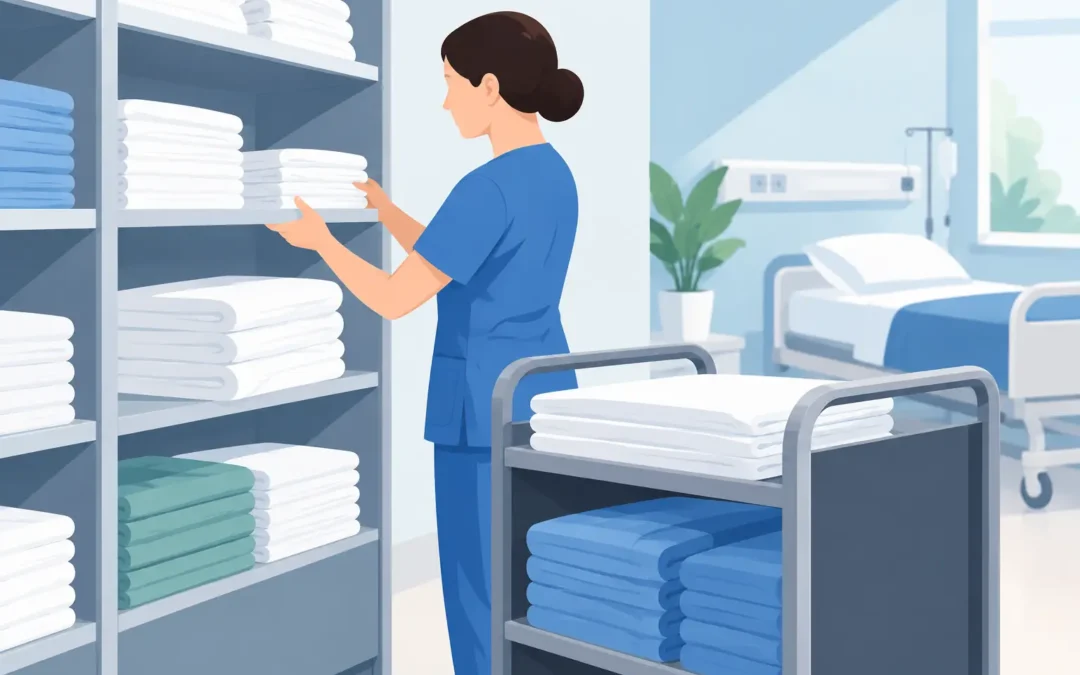
A missing pillowcase or a short stack of bath towels can create a problem long before the next delivery arrives. In hospitals, clinics, nursing homes, rehabilitation centers, and assisted-living communities, linen availability affects room turnover, infection-control routines, staff time, and patient comfort. This healthcare linen inventory guide provides a practical way to set stock levels, organize storage, and buy textiles that hold up under frequent commercial laundering.
Start With the Linen Your Facility Actually Uses
Inventory works best when it reflects daily use rather than a generic supply list. A small outpatient clinic may need examination-table paper, patient gowns, a limited number of blankets, and cleaning cloths. A long-term care facility needs a deeper supply of sheets, pillowcases, bath towels, washcloths, blankets, mattress pads, and resident-room replacements.
Begin by separating linen into working categories. Bed linens include flat sheets, fitted sheets, pillowcases, blankets, comforters, and mattress pads. Bath linens include bath towels, hand towels, washcloths, bath mats, and robes where applicable. Cleaning textiles include bar mops and microfiber cloths. Patient apparel and specialized items, such as gowns or spa wraps used in therapy settings, should be tracked separately.
Do not combine all linen counts into one total. A facility can have plenty of towels and still be short on standard pillowcases. Each item has its own use rate, loss pattern, replacement cost, and storage requirement.
Standardize Sizes and Colors Where Possible
Too many sizes and colors make inventory harder to count and reorder. Standardizing core patient-room linens reduces picking errors and allows staff to substitute without creating an uneven appearance. This does not mean every textile must be identical. Higher-acuity units, private suites, rehabilitation programs, and premium care areas may have different requirements.
Use a clear naming system on shelves, carts, and count sheets. For example, identify sheets by size, such as Twin XL fitted sheet or 108 x 90 flat sheet, rather than using broad labels such as “large sheets.” The same approach applies to towels. A 16 x 27 institutional hand towel serves a different purpose than a full bath towel.
Set Par Levels for Every Linen Category
A par level is the quantity of a specific item needed to keep operations running between laundry cycles and deliveries. It should cover normal use, items in the wash, items being processed or repaired, and a reasonable reserve for unexpected demand.
For many healthcare operations, a three-par system is a sensible starting point. One par is in use, one is in laundry, and one is clean and ready for issue. Facilities with in-house laundry may be able to operate with less reserve if turnaround is dependable. Facilities that send laundry off-site, experience delivery delays, or manage high patient turnover often need more.
A basic calculation looks like this:
Average daily use x days between clean-linen availability x number of pars = target inventory
If a unit uses 40 bath towels per day and clean towels return every day, three par levels suggest 120 towels. That number is only a starting point. Add a buffer if admissions fluctuate, isolation protocols increase linen use, or weekend deliveries are limited.
Track par levels by department when departments draw from separate linen rooms. Centralizing all stock may look efficient on paper, but it can create delays if staff must travel across a large facility for basic supplies. Keep the main reserve secure, then stock unit-level closets to their approved par.
Revisit Pars After Changes in Census or Service
Par levels are not permanent. Review them after a change in bed count, patient census, service mix, laundering schedule, or infection-control procedure. A new therapy program, for example, may increase demand for towels, blankets, and washable wraps. A shift toward more private rooms may increase bedding requirements.
Review high-use items monthly and lower-use reserve items quarterly. If staff repeatedly request emergency pulls, the par is probably too low. If shelves remain full while items age without use, the par may be too high or the wrong product has been ordered.
Count What You Have, Not What You Ordered
Purchase records show what came into the building. They do not show what is clean, in use, damaged, misplaced, or discarded. A usable inventory count should separate stock by condition and location.
At minimum, count clean ready-to-use linen, linen in circulation, laundry in process, damaged items awaiting review, and emergency reserve. This provides a more accurate picture than a single total number.
A regular count also exposes loss. Towels and washcloths often disappear faster than sheets because they move through more departments and may be used for cleanup tasks when proper cleaning cloths are unavailable. Pillowcases may be discarded with contaminated materials. Flat sheets can be repurposed for transport or privacy screens and never return to the linen system.
Assign responsibility for counts to a specific role or shift. The process does not need to be complicated, but it must be consistent. A count sheet, spreadsheet, or inventory system should record the item, approved par, on-hand clean quantity, order point, and notes about damage or unusual use.
Build a Reorder Point Before Shelves Run Low
Waiting until a linen room looks empty creates rushed purchasing and inconsistent substitutions. Set a reorder point for each core item based on average use and supplier lead time.
For example, if your facility uses 25 fitted sheets per day and expects a new shipment in seven days, the minimum reorder point should cover at least 175 sheets, plus a safety quantity for delayed freight or an increase in census. The correct safety stock depends on the reliability of your laundry and supply schedule. A facility with daily local deliveries can carry less reserve than one serving a remote area or ordering less frequently.
When placing orders, look beyond unit price. A lower-priced towel that thins quickly, frays at the hem, or loses absorbency can cost more over time than a first-quality institutional towel with a longer service life. Weight, construction, edge finish, fiber content, and intended laundering conditions all affect value.
Choose Textiles for the Job, Not Just the Budget
Healthcare linen needs to withstand repeated washing, drying, handling, and disinfecting processes. A product that works well in a guest bathroom may not be suitable for a high-turnover patient unit.
For towels and washcloths, select the weight and construction that match use. Lighter institutional towels dry faster and can be practical for high-volume operations. Heavier towels can provide a more comfortable experience in private care, rehabilitation, or premium residential settings, but they require more storage space and may take longer to dry.
For sheets, verify dimensions before ordering. A sheet that is technically the right bed size but too narrow for the mattress depth will pull loose and require early replacement. Consider the mattress pad, mattress height, and laundering shrinkage when selecting fitted sheets. Flat sheets should provide adequate tuck and coverage without excessive bulk.
First-quality merchandise matters in an inventory program because consistency makes forecasting easier. When the same product performs predictably from order to order, managers can plan replacement cycles and avoid the mixed appearance that comes from filling shortages with whatever is available.
Control Losses Without Slowing Down Care
Loss prevention should support staff, not create extra barriers during patient care. Start with clear collection points for soiled linen and separate receptacles for disposable waste. When linen and waste are mixed, usable goods are lost and staff face unnecessary sorting issues.
Keep clean storage areas orderly and protected from moisture, dust, and unauthorized removal. Use the oldest clean stock first so items do not sit at the back of shelves. Label carts and closets clearly, especially where bath linen, bedding, cleaning textiles, and resident-specific items are stored nearby.
If loss remains high, look for the cause before ordering more. It may be a shortage of microfiber cloths causing staff to use washcloths for cleaning. It may be an unclear discard policy, inadequate soiled-linen bags, or a department drawing from another unit’s supply. Correcting the workflow can reduce replacement purchases more effectively than adding inventory.
Keep an Emergency Linen Reserve
Every facility needs a controlled reserve for admissions surges, outbreaks, laundry equipment failures, weather disruptions, and delivery delays. This reserve should be separate from day-to-day par stock, counted regularly, and released only by designated personnel.
The reserve does not need to duplicate every product in full depth. Focus on essential items: sheets in the sizes you use most, pillowcases, blankets, bath towels, hand towels, washcloths, mattress pads, and cleaning cloths. Store it in a dry, secure area and rotate it into normal use periodically to prevent long-term storage damage.
Reliable linen inventory is built through regular counts, realistic par levels, and commercial-grade products chosen for the work they must do. When staff can reach the right clean textile at the right time, patient care moves with fewer interruptions and purchasing stays under better control.