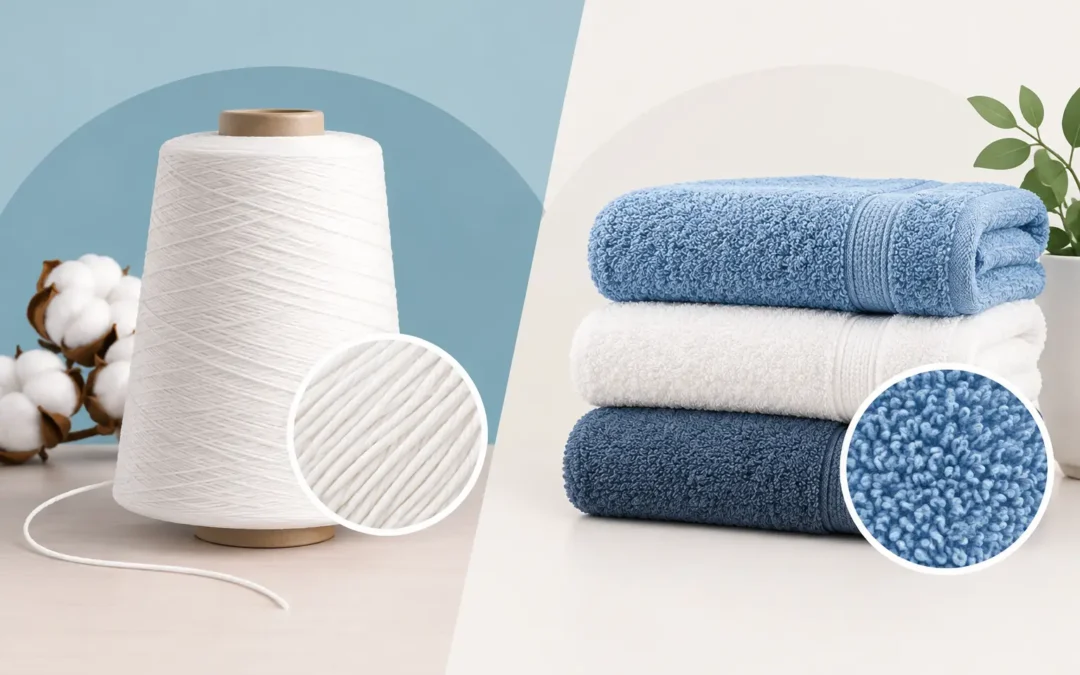
The phrase ring spun versus towels can be confusing because ring spun is not a separate towel category. It describes how the cotton yarn is made. A towel can be ring spun, open-end spun, combed cotton, Turkish cotton, or a blend, depending on the yarn and construction. For buyers, the practical question is simple: does a ring-spun towel provide the feel, appearance, durability, and price point your property needs?
For hotels, salons, fitness centers, clinics, and residential facilities, towel selection is rarely about softness alone. Towels must hold up in repeated commercial laundering, dry efficiently, fit the available budget, and give guests or clients a clean, professional impression. Ring-spun cotton can be an excellent choice, but it is not automatically the best choice for every application.
What Ring-Spun Cotton Means
Ring-spun cotton is made by twisting and thinning cotton fibers into a fine, smooth yarn. The spinning process aligns the fibers more closely than basic open-end spinning. The result is generally a softer yarn with a more refined surface.
In a finished towel, ring-spun yarn often produces a smoother hand feel and a more polished look. The loops may feel less coarse against the skin, which is why ring-spun towels are common in better hotel, spa, and home towel programs. They can offer an appealing balance between everyday performance and a step-up guest experience.
That said, the label alone does not tell the whole story. Cotton quality, towel weight, loop construction, finishing, size, and laundering practices all affect how a towel performs. A well-made institutional towel with a practical construction may outperform a poorly made ring-spun towel in a high-turnover laundry operation.
Ring Spun Versus Other Towel Yarns
The most useful comparison is ring spun versus open-end spun cotton, since both are common in commercial towels. Open-end yarn is produced with a faster process that creates a bulkier, more economical yarn. These towels tend to have a slightly more textured feel and are often selected for value-focused applications.
Ring-spun towels usually feel softer and look more upscale from the start. Open-end towels are often more economical to purchase and can be a sensible choice where replacement cost matters more than luxury feel. A busy gym, locker room, car wash, industrial facility, or housekeeping department may prefer a durable value towel that can be replaced easily when needed.
Combed ring-spun cotton is a further step up. Before spinning, shorter fibers and impurities are removed, leaving longer fibers for a smoother, more consistent yarn. This can improve softness and reduce loose lint, especially during the first several washes. It is a good fit for spas, boutique lodging, higher-end guest rooms, and households that want a more premium bath towel.
Do not confuse ring spun with Turkish cotton, Egyptian cotton, or zero-twist cotton. Those descriptions refer to fiber origin, fiber characteristics, or yarn construction. A towel may combine more than one of these features. For example, a towel can use ring-spun yarn and also be marketed as Turkish-style cotton. The product specifications, not one marketing term, should guide the purchase.
Where Ring-Spun Towels Perform Best
Ring-spun towels make the most sense when touch and presentation are part of the customer experience. In a hotel room, salon, day spa, clubhouse, or bed-and-breakfast, a soft towel supports the impression that the facility pays attention to details. It can also be a practical upgrade for guest bathrooms, premium locker rooms, and residential use.
For pools and fitness centers, consider the operating conditions before paying for a premium ring-spun towel. Chlorine exposure, sunscreen, frequent turnover, and high-temperature washing can be hard on any cotton towel. A medium-weight ring-spun towel may be appropriate for a club that wants a better member experience, while a basic institutional towel may be the more sensible choice for a high-volume public pool.
Health care and residential-care buyers should look beyond softness. Appropriate size, ease of laundering, color coding, inventory control, and dependable replacement availability may carry more weight. A ring-spun towel can work well in patient or resident settings when comfort is a priority, but the towel should also match the facility’s wash formula and expected service life.
Weight Matters as Much as Yarn Type
Towel weight is commonly measured in grams per square meter, or GSM. In general, a higher GSM towel has more cotton per square yard and feels denser. It may absorb more water, but it can take longer to dry and add weight to each laundry load.
A lighter towel can be the better operational choice for daily service. It dries faster, takes up less storage space, and helps control laundry weight. This is useful for housekeeping programs, salons with rapid towel turnover, and properties working with limited dryer capacity.
Midweight towels are often the best all-around choice for hospitality and home use. They provide enough body and absorbency to feel substantial without creating the drying time of a very heavy luxury towel. Heavier ring-spun towels are best reserved for properties where a plush, premium experience justifies the added laundry cost and slower drying time.
A ring-spun yarn does not automatically make a towel heavy or absorbent. A lightweight ring-spun towel may feel soft but still be designed for quick service. Conversely, a heavy towel made with a different yarn construction may feel very dense. Review the full specification before comparing price per towel.
Absorbency, Drying, and Lint
Cotton is naturally absorbent, but a towel reaches its best absorbency after it has been washed. New towels may contain finishing agents from manufacturing that make them feel especially soft or smooth at first. Several wash cycles usually improve water absorption.
Ring-spun towels can provide strong absorbency because cotton loops create surface area to hold moisture. However, loop density and pile height matter. A tightly constructed towel with adequate loops can perform better than a loosely made towel that looks thick on the shelf.
Some initial lint is normal with cotton towels, especially when they are new. Premium ring-spun and combed cotton products may shed less than lower-grade alternatives, but no cotton towel is completely lint-free. Washing new towels separately for the first few cycles, avoiding excess detergent, and keeping dryer filters clean will help control lint.
Overdrying is one of the most common reasons towels become stiff and lose service life. High heat can damage cotton fibers over time and can make a soft ring-spun towel feel rough. Use the proper drying cycle for the towel weight, avoid heavy use of fabric softener, and remove towels promptly when dry.
How to Buy for Your Operation
Start with the towel’s job, not the yarn label. Ask who will use it, how often it will be washed, what dryers are available, and whether the towel is part of a value, standard, or luxury guest experience. Then compare size, weight, cotton content, construction, color, and price across first-quality options.
For a motel or value hotel, a durable midweight towel may offer the best balance of cost and guest comfort. For a day spa or upscale lodging property, a softer ring-spun or combed ring-spun bath towel can support a more premium presentation. For gyms and high-volume service environments, a lighter towel that dries quickly and is easy to replace may protect the operating budget better.
Buyers should also consider the full towel assortment. Bath towels, hand towels, wash cloths, bath mats, and pool towels do not always need the same weight or construction. A property may choose a ring-spun bath towel for guest rooms while using a more economical wash cloth or cleaning towel for back-of-house work.
United Textile Supply focuses on first-quality merchandise across value, institutional, and luxury towel programs. That gives buyers room to match towel performance to the application instead of paying premium pricing where it does not add value.
The right towel is the one your staff can process consistently, your budget can support, and your guests will be comfortable using. If ring-spun construction improves the experience in the places people notice most, it is a worthwhile upgrade. If speed, replacement cost, and laundry efficiency lead the decision, a simpler towel may be the smarter buy.