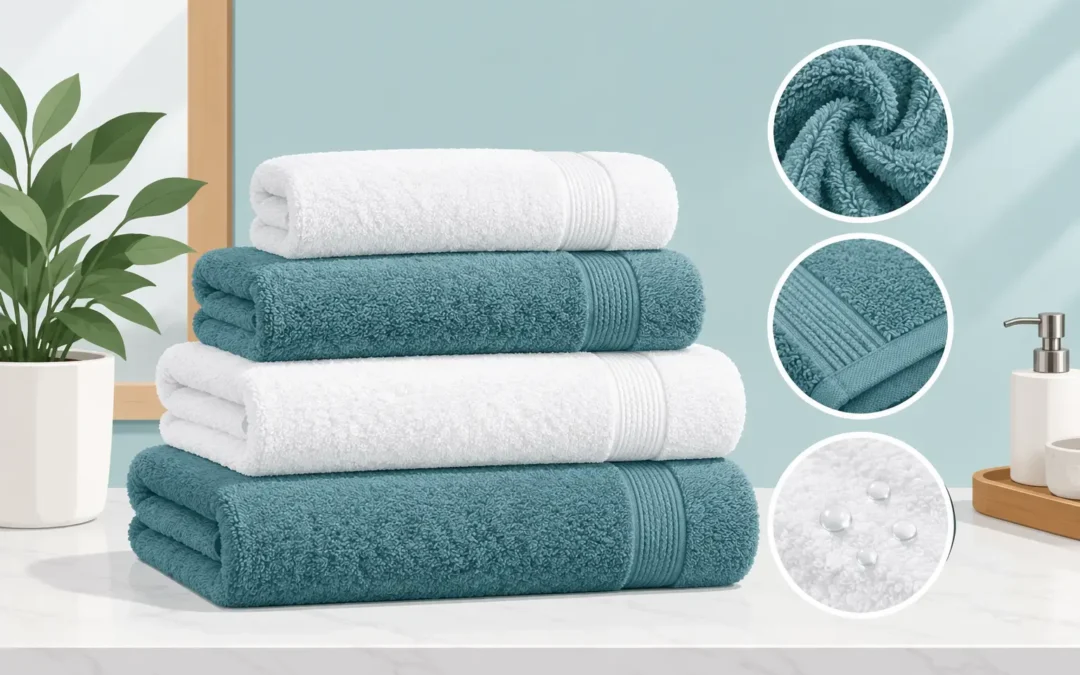
A towel may look acceptable when it arrives and still disappoint after a few wash cycles. It may shed heavily, lose its shape, develop uneven loops, or feel thin before it has earned its place in a linen room. What makes towels first quality is not one label, one fiber, or one weight. It is a consistent manufacturing and inspection standard that helps buyers receive towels made as represented, without defects that can shorten service life or weaken the guest experience.
For hotels, salons, clinics, fitness centers, and households, that distinction matters. Towels are handled often, washed hard, and noticed immediately. A reliable first-quality towel supports a clean, professional presentation while giving the buyer a more predictable return on the purchase.
What Makes Towels First Quality?
First quality means the towels meet the manufacturer’s intended specifications and pass inspection for sale as regular merchandise. The fabric, dimensions, color, construction, and finishing should be consistent with the product description. First-quality merchandise is not defined by being the heaviest, softest, or most expensive towel on the shelf. A basic institutional towel can be first quality, just as a luxury cotton towel can be first quality.
The grade addresses whether the item was produced correctly. It does not automatically determine its performance level for every application. A lightweight towel designed for a gym may be a sound first-quality choice because it dries quickly and launders efficiently. That same towel may not be the right fit for a boutique hotel expecting a fuller, more luxurious hand.
Mill seconds are different. They are commonly sold at a lower price because they may have irregular weaving, color variation, stains, pulled loops, off-size dimensions, imperfect hems, or other cosmetic and construction flaws. An overrun may refer to extra production beyond an order, but buyers should still confirm its grade and consistency. It can be usable merchandise, but it should not be assumed to carry the same specification control or repeat-order reliability as standard first-quality inventory.
The Construction Details That Separate a Better Towel
A first-quality grade starts with controlled production. Buyers should still look closely at the elements that determine how the towel performs in use.
Fiber Content and Cotton Quality
Cotton remains the standard choice for bath towels because it is absorbent, comfortable, and familiar to guests and staff. The cotton type and yarn quality affect softness, strength, and how the towel changes over repeated laundering. Longer-staple cotton fibers generally create smoother, stronger yarns with fewer exposed fiber ends. That can help reduce linting and maintain a more refined feel.
Not every operation needs premium long-staple cotton. Standard cotton towels may be the practical choice for back-of-house use, athletic facilities, cleaning applications, or properties where replacement cost is the leading concern. The important point is that the fiber content should match the stated product specification and the intended use.
Blends also have a place. Cotton-polyester towels may offer faster drying and good durability in certain high-turnover environments, although they usually do not have the same natural absorbency and hand as an all-cotton towel. A first-quality blend is not inferior simply because it is blended. It should be judged by whether it delivers the performance the operation needs.
Yarn, Pile, and Absorbency
The loops on the face of a towel are called pile. Even, securely formed pile is a visible sign of sound construction. When loops are inconsistent, sparse, or easily pulled, the towel can look worn prematurely and may snag during laundering or daily use.
Yarn construction also changes the feel and function. Ring-spun cotton is often softer because the yarn is made from tightly twisted fibers. Combed cotton removes shorter fibers before spinning, which can create a smoother, cleaner finish. Zero-twist and low-twist styles can feel especially plush and absorbent, but they may require more careful laundering and can be less suited to operations that prioritize maximum ruggedness over softness.
A towel should absorb water effectively without feeling overly dense or slow to dry. Thick pile can improve comfort, but it also increases drying time, laundry energy use, storage bulk, and replacement cost. For commercial buyers, the best towel is usually the one that balances absorbency with the speed and durability required by the laundry program.
Weight Is Useful, but It Is Not the Whole Story
Towel weight is often expressed in grams per square meter, or GSM. Higher GSM generally indicates a heavier, denser towel, while lower GSM indicates a lighter towel. It is a useful comparison point when evaluating similar towel types, but GSM alone does not prove first quality.
A 600 GSM towel can feel substantial, yet poor yarn quality or loose construction can still lead to lint, pulls, and uneven wear. A 10s or 16s institutional towel may have a lower-profile feel but provide dependable service through frequent industrial washing. Consider weight alongside fiber, pile construction, finish, and the actual demands of the property.
Size, Shape, and Finished Edges
A properly made towel should be close to its stated finished dimensions, with squared corners and a balanced shape. Towels that twist, taper, or shrink unevenly can create an untidy appearance on shelves, treatment tables, and guest-room racks.
Hems matter more than many buyers realize. Strong, straight hems help prevent edge fraying and allow the towel to hold up under repeated use. Reinforced dobby borders can add a finished look and support durability, but an overly decorative border may reduce the usable absorbent area. For high-volume laundering, simple, well-sewn construction is often the sensible choice.
Inspection and Consistency Matter for Institutional Orders
A first-quality towel should be evaluated as part of a repeatable product program, not as a single attractive sample. Institutional purchasers need consistency from case to case and order to order. That means predictable size, color, weight range, weave, and finish.
Quality inspection typically checks for visible defects such as holes, stains, weaving faults, uneven pile, loose threads, skewed hems, and unacceptable color variation. It also verifies that the finished towel meets the supplier’s specifications. No textile is immune to normal variation, but first-quality standards are intended to keep variation within an acceptable range.
Color consistency is especially relevant for spas, salons, hotels, and health care settings that maintain a coordinated presentation. White towels remain a practical choice because they can be laundered and sanitized aggressively. Colored towels can support branding or help separate departments, but they require colorfast dyes and appropriate wash practices to maintain their appearance.
At United Textile Supply, first-quality merchandise is a core buying standard because dependable supply starts with dependable specifications. Buyers can then select among value, institutional, and luxury towel options based on the actual demands of their property rather than accepting defects as the trade-off for a lower upfront price.
Match First-Quality Towels to the Job
The right specification depends on where and how the towel will be used. Guest-room bath towels need an attractive hand, good absorbency, and a size that feels generous without overwhelming the laundry operation. Salon towels need to tolerate chemicals, dyes, and frequent processing, so darker colors and durable construction may be more useful than extra-soft pile.
Fitness centers, pools, schools, and recreation facilities often need towels that dry relatively quickly and can move through a high-volume laundry cycle. Health care and residential-care environments may prioritize controlled color programs, easy identification, consistent sizing, and wash durability. For household buyers, softness and appearance may carry more weight, although a towel that sheds less and keeps its shape is still the better long-term value.
Before placing a larger order, check the product details and compare the towel to the operation’s current linen program. Confirm fiber content, size, weight, border style, color, and the expected laundering conditions. If possible, wash a sample using the same chemicals, water temperature, and drying process used on site. A towel’s true value becomes clearer after several cycles, not just after the first touch.
First Quality Does Not Mean One Price Point
A common mistake is treating first quality as a premium-only category. First quality describes the condition and conformity of the product, while price reflects materials, weight, finishing, brand, and production volume. A practical economy towel can be first quality and provide excellent value for a motel, gym, or janitorial program. A higher-end towel can be first quality and justify its cost through a fuller hand, refined yarns, and a stronger guest impression.
The right purchase is the towel that meets the required standard without paying for features the application will not use. A luxury bath towel may be worthwhile for a spa suite or upscale lodging property. It may be unnecessary for a high-turnover facility where fast drying, easy replacement, and laundry efficiency matter more.
When comparing towel options, ask a simple operational question: Will this product continue to look appropriate and perform reliably after the number of wash cycles our operation expects? That question keeps the focus on useful quality, not just a low case price or an impressive first impression.
A first-quality towel is a practical foundation for any linen program. Choose the grade first, then select the fiber, weight, construction, and price level that fit the people using it and the laundry that has to keep it working.