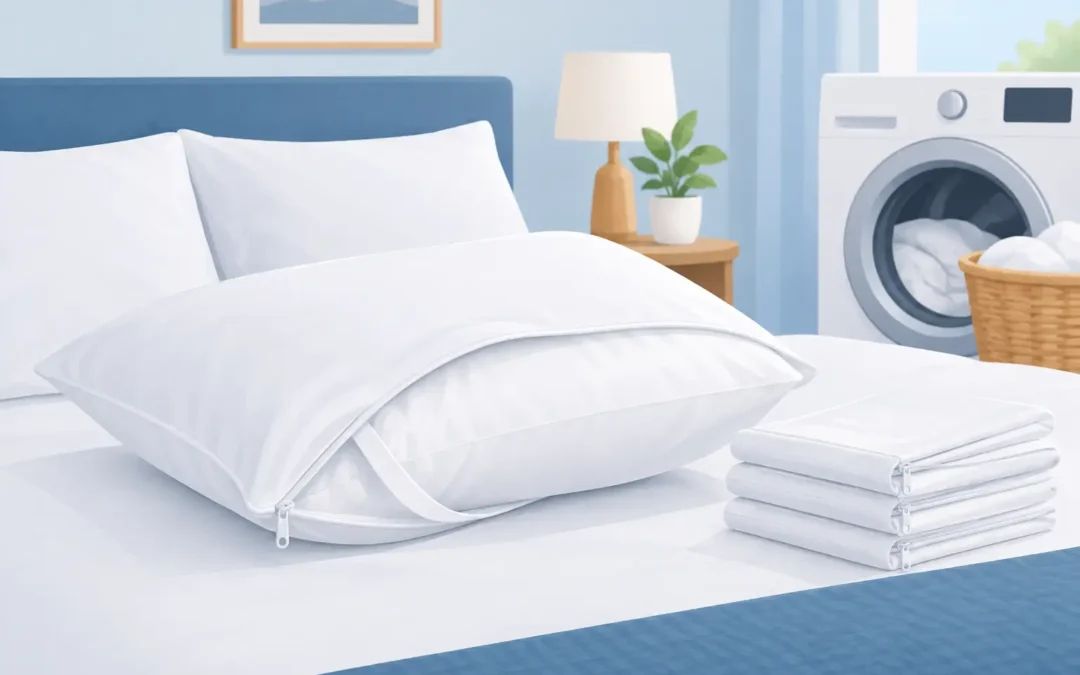
A pillow can look clean at checkout and still carry the moisture, skin oils, hair products, and everyday use that shorten its service life. The best hotel pillow protectors create a washable barrier between the pillow and the guest-facing pillowcase, helping housekeeping maintain a cleaner bed presentation without replacing pillows before their time.
For hotels, motels, bed-and-breakfasts, health care facilities, and residential-care properties, a pillow protector is not simply an extra bedding layer. It is a practical operating item. The right protector must fit the pillow correctly, stay comfortable under a pillowcase, tolerate repeated commercial laundering, and support the property’s hygiene standards. The wrong one can trap heat, make noise, shrink after washing, or fail at the zipper when it is needed most.
What Makes the Best Hotel Pillow Protectors
A hotel pillow protector should be selected for the laundering process and guest experience, not only for its initial price. A low-cost protector that tears, pills, or loses its shape after a few wash cycles can create more replacement work than it saves.
Start with fabric construction. A smooth woven protector made from cotton, polyester, or a cotton-polyester blend is a reliable choice for many guest rooms. It adds a layer of protection while retaining the familiar feel of standard bedding. Polyester-rich blends generally offer better wrinkle resistance and faster drying. Cotton-rich options may feel more natural and breathable, but they can require more attention to shrinkage and drying time.
Thread count alone is not the deciding factor. Buyers should consider the total construction: fabric weight, weave, stitching, closure quality, and how the protector holds up after repeated washing and drying. A tightly woven fabric helps limit the transfer of light moisture and oils, while a well-finished surface reduces friction against the pillowcase.
Fit matters just as much. A protector that is too small strains at the seams and zipper. One that is too large bunches around the pillow and can make the bed look uneven. Measure the actual pillows in use, including loft, then select a protector sized for the pillow category rather than relying on a generic label alone.
Choose the Right Protection Level
There is no single protector style that fits every room type. The best choice depends on the property, pillow fill, laundry setup, and the level of liquid protection required.
Standard zippered fabric protectors
For most hotels and motels, a zippered woven fabric protector is the sensible everyday choice. It fully encloses the pillow, stays in place better than an open-end cover, and can be removed for laundering between guests or on the property’s scheduled linen rotation. This style works well for polyester-filled and fiber-filled pillows used in standard guest rooms.
Look for a protected zipper end and secure stitching. Exposed zipper edges can catch during laundry or feel noticeable through thin pillowcases. A zipper that closes cleanly and remains flat is a small detail that protects both the pillow and the guest’s comfort.
Waterproof or moisture-barrier protectors
Waterproof pillow protectors add a membrane or coated layer that blocks fluids from reaching the pillow. They are particularly useful in health care, residential care, children’s accommodations, extended-stay rooms, and other settings where incontinence or higher moisture exposure is a concern.
The trade-off is breathability. Some waterproof constructions can feel warmer or produce a slight rustling sound, especially when paired with a thin pillowcase. Better-quality moisture barriers are designed to reduce these concerns, but buyers should still test a sample in a made bed before converting an entire property. Waterproof protection is valuable when it addresses a real risk. It may be unnecessary in every standard room if it compromises the sleep experience or slows the laundry operation.
Allergen-barrier protectors
A tightly woven, fully enclosed protector can also help create a barrier against dust and allergens. This can be a useful feature for lodging properties that want an added cleanliness message or for households managing allergy concerns. The protector should still be comfortable and easy to launder. A specialty feature has limited value if staff find the item difficult to remove, reinstall, or keep in service.
Fabric and Closure Details That Affect Operations
Pillow protectors face more handling than many buyers expect. They are stripped from beds, sorted, washed, dried, folded, stored, and reinstalled repeatedly. Small construction details determine whether the product remains useful after that cycle.
Zippered protectors are generally preferred for institutional use because they provide full coverage. A quality zipper should move smoothly, hold closed during laundering, and lie flat at the end of the pillow. Envelope closures are faster to install, but they leave part of the pillow exposed and may shift in use. They are better suited to light residential use than to properties seeking complete pillow coverage.
Seams should be consistent and secure, especially around the zipper and corners where pulling is most common. Reinforced seams can be worthwhile for high-turnover properties, student housing, clinics, and facilities where bedding moves through commercial equipment every day. A neatly finished protector also improves presentation when a pillowcase is removed during room inspection.
Color is usually straightforward: white remains the standard for hotel bedding because it supports a clean, uniform look and allows visible inspection after laundering. White protectors can be processed with other white linens when care instructions permit. For specialty applications, color-coded protectors may help separate departments or pillow types, but standardization is usually easier for inventory control.
Match the Protector to the Pillow and Room Type
Before ordering, identify the pillow sizes currently used across the property. Standard, queen, king, and specialty pillows require corresponding protectors. Do not assume a standard protector will comfortably cover a queen pillow, even if it can be forced over the fill. Stretching the cover reduces its useful life and makes bed making harder for staff.
Also consider the pillow fill. Down and feather pillows benefit from a tightly woven protector that helps contain fine feathers and protects the investment from body oils. Fiber pillows usually need a durable, easy-care protector that can handle frequent laundering without becoming stiff or misshapen. Memory foam and other foam pillows require special attention to care labels because the pillow itself may not be washable. In those cases, a washable protector is especially useful, but it must not trap excessive heat around the foam.
Room type can change the specification. A limited-service hotel may prioritize durable polyester-blend protectors that process quickly and control replacement cost. A boutique inn may choose a softer cotton-rich protector to support a more premium bedding feel. A health care or residential-care facility may place moisture resistance and infection-control procedures first. These are all reasonable decisions when they match the application.
Laundry Practices That Extend Protector Life
Even first-quality protectors will fail early if they are washed outside their care requirements. Follow the fabric and zipper manufacturer’s recommendations for water temperature, bleach use, drying heat, and load size. Overloading commercial machines creates extra stress at seams and closures, while excessive dryer heat can damage waterproof membranes and shrink cotton-rich fabrics.
Close zippers before washing whenever possible. This helps protect the zipper teeth and reduces snagging on sheets, towels, or other protectors. Sorting by fabric type and soil level also helps maintain a consistent finish. Heavy towel loads can be harder on lightweight bedding protectors than a dedicated linen load.
Inspect protectors during folding or bed making. Pull items with broken zippers, open seams, permanent staining, or loss of waterproof performance from service. Keeping a small replacement inventory prevents a room from going without protection when an item is removed unexpectedly.
Buy for Replacement Cycles, Not Just Opening Day
A practical order includes enough protectors to cover every pillow in service plus the par needed for laundry, turnovers, and replacements. Properties with same-day turns and on-premise laundry need more backup stock than a small operation with a slower changeover schedule. Buying only one protector per pillow often creates a shortage as soon as a load is delayed or an item fails inspection.
For multi-room properties, standardizing one or two protector types simplifies staff training, storage, and reordering. It also makes it easier to compare performance over time. Track how many protectors are removed for damage each month. If a lower-priced option needs frequent replacement, moving to a stronger construction may improve the total cost of ownership.
United Textile Supply can help buyers compare pillow protectors with the bedding, pillows, and laundering demands already in place. The most effective selection is usually not the most complicated one. It is the first-quality protector that fits the pillow, meets the property’s protection needs, and keeps performing through the wash cycles that define daily hotel operations.
A clean, comfortable pillow begins before the pillowcase goes on. Choose protectors as working linens, keep the right par level on hand, and make their care part of the regular room-turn process.